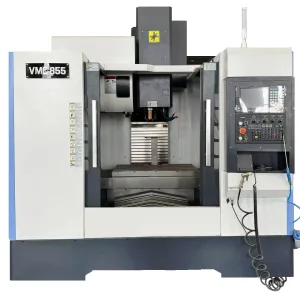
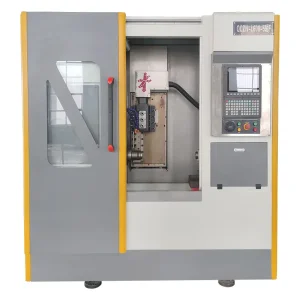
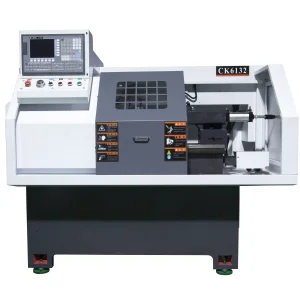
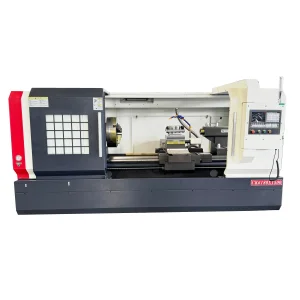
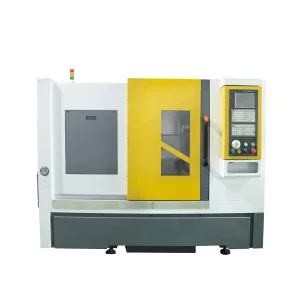
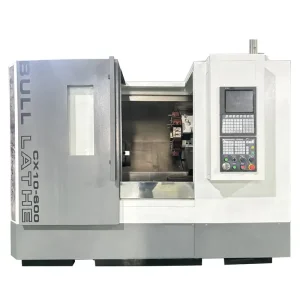
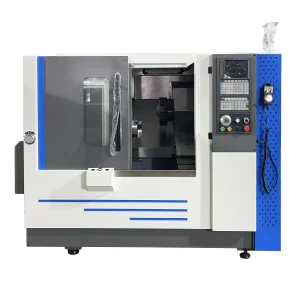
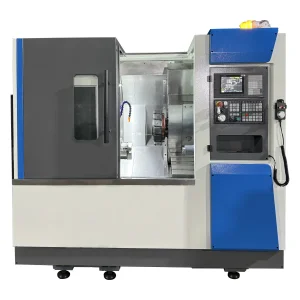
In the modern era of Industry 4.0, "Little Lathes" or compact CNC machines have transitioned from simple entry-level tools to sophisticated, highly autonomous manufacturing units. The global demand for micro-machining, particularly in the electronics, medical device, and aerospace sectors, has necessitated a shift in manufacturing philosophy.
Key Trends Defining the Sector:
Strategically located in Taizhou, Zhejiang—the heart of China's machinery manufacturing cluster—Shiheng CNC represents the pinnacle of localized industrial strength. Our dual-facility operations, spanning over 30,000 square meters, allow us to maintain a vertical supply chain, from raw material casting to final high-precision debugging.
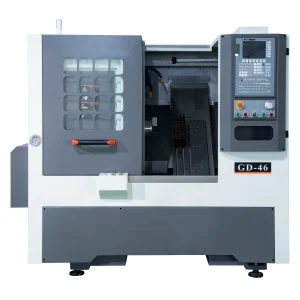
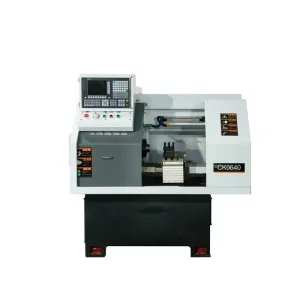
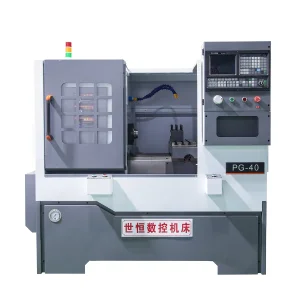
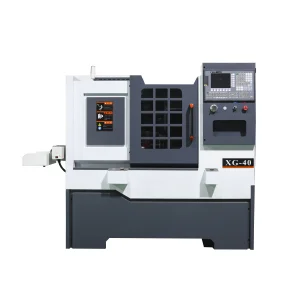
We specialize in the CK, XG, and GD series. These machines are engineered with hardened guide rails and super-audio frequency quenching, ensuring durability that meets international ISO standards for precision and structural integrity.
Source aggregation in China provides a unique "Information Gain" for international buyers. It isn't just about labor costs; it's about **Cluster Advantage**.
From the production of the casting to the assembly of high-speed spindle motors and the coding of CNC controllers, the ecosystem in regions like Zhejiang ensures rapid procurement and assembly. This reduces lead times for customized orders significantly compared to dispersed global supply chains.
Whether you require a custom tailstock configuration, specific Y-axis capabilities, or an integration into a robotic cell, Chinese manufacturers—specifically those with R&D capabilities like Shiheng CNC—offer agile engineering teams that can pivot designs to meet unique project specifications.
Chinese factories have refined their logistics and export compliance procedures to a science, offering stable FOB/CIF terms, comprehensive shipping documentation, and reliable after-sales support protocols that address global time zones.
A: A Slant Bed design offers superior chip evacuation and thermal stability, making it ideal for high-precision, continuous automated production. A Flat Bed is often more cost-effective and easier for manual part loading, suitable for smaller batch, custom work.
A: We utilize a multi-stage QC process: raw material inspection, thermal treatment monitoring, component-level precision testing, and a final 24-hour run-in test under load before dispatch.
A: We offer remote diagnostics, video installation guidance, and a dedicated team of engineers ready to address programming issues or hardware maintenance questions via global communication channels.
 XINSHIHENG