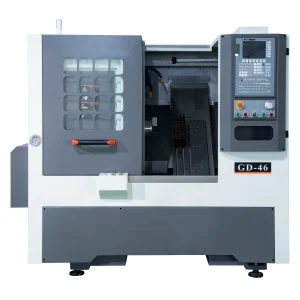
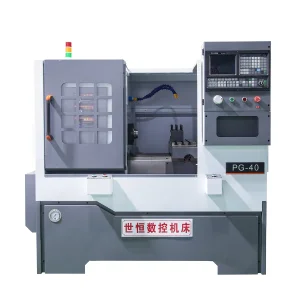
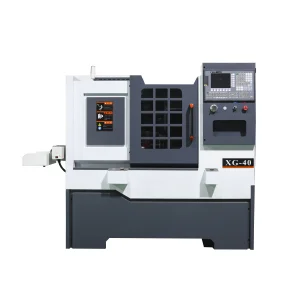
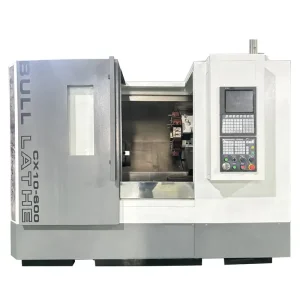
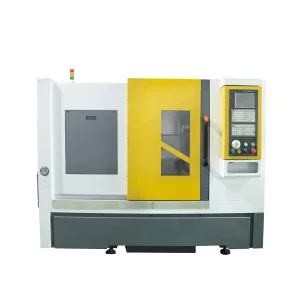
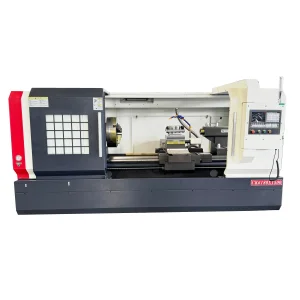
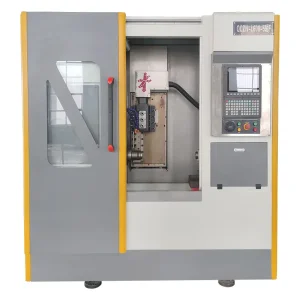
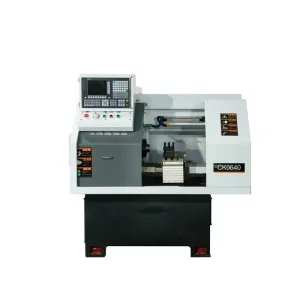
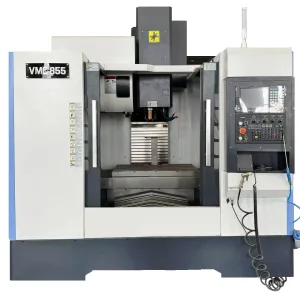
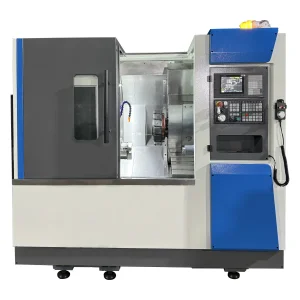
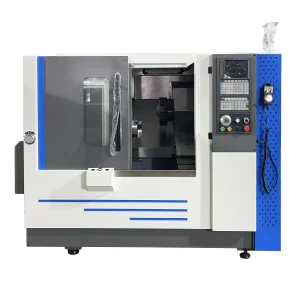
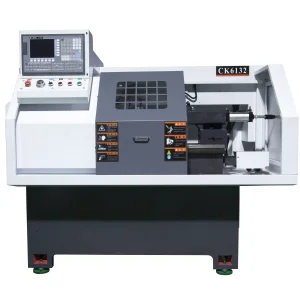
In the global landscape of precision manufacturing, the Flat Bed CNC Lathe remains an indispensable asset. Unlike slant bed machines primarily designed for high-speed mass production, flat bed lathes offer superior rigidity and accessibility for medium-to-heavy duty turning operations. As experts in this sector, we observe that the modern procurement requirement has shifted from mere "low-cost machinery" to "holistic production solutions."
The convergence of physical hardware and digital intelligence—often termed the "China Factory 4.0" paradigm—has fundamentally changed how CNC lathes are built and deployed. Modern supply chains are not just looking for a machine; they are looking for supply chain resilience. This means selecting a manufacturer who integrates predictive maintenance sensors, remote diagnostic capabilities, and energy-efficient drive systems.
Procurement managers across Europe, North America, and Southeast Asia are increasingly prioritizing Total Cost of Ownership (TCO) over initial purchase price. A high-quality flat bed CNC lathe from a reputable manufacturer now guarantees:
With a foundation in Taizhou’s machinery hub, we leverage years of R&D to bridge the gap between traditional craftsmanship and modern CNC automation.
Our Huaian facility spans 30,000 square meters, ensuring that even large-scale wholesale orders are fulfilled with consistent quality and rigorous testing.
Every lathe undergoes precision debugging to ensure minimal tolerance deviations, serving critical sectors like automotive and hardware manufacturing.
Our machines are not one-size-fits-all. We understand that a workshop in Germany has different operational requirements than a parts factory in Vietnam. Our flat bed CNC lathes are optimized for:
A: It refers to a manufacturer's ability to maintain stable production, quality control, and timely delivery despite global logistics fluctuations. Our integration of in-house manufacturing, from casting to final assembly, guarantees this resilience.
A: Flat bed lathes offer greater operational versatility, particularly for larger workpieces and manual-like accessibility. They are the "workhorses" of the job shop environment, providing unmatched stability for long-term, heavy-duty projects.
A: Through a multi-stage Quality Assurance (QA) protocol: from raw material inspection and vibration aging treatment of the bed to laser interferometry during the final assembly and debugging phase.
 XINSHIHENG