Why Choose a Heavy Duty CNC Lathe for Your Business?

Time:2026-11-03 Author:Amelia
0%

Why choose a Heavy Duty CNC Lathe for your business? The answer often begins with the workpiece: a long steel shaft, a heavy casting, or a large-diameter component that needs stable cutting. A machine built for these jobs can offer a rigid bed, strong spindle torque, and reliable support under load. Those features may help reduce vibration and keep dimensions consistent during demanding production runs. But size alone is not a business case. Floor space, tooling costs, operator skills, and expected machine utilization all deserve honest review.

Grand View Research’s CNC Machine Market report estimated the global market at USD 101.22 billion in 2023 and projected 9.3% annual growth from 2024 to 2030. This covers CNC machines broadly, not heavy-duty lathes alone, so it signals wider investment—not guaranteed demand for your parts. Shigeo Shingo, the industrial engineer known for his work on production systems, is often quoted: “The most dangerous kind of waste is the waste we do not recognize.” That applies on the shop floor. A cycle that looks productive may still hide excess setup time, scrap, or idle capacity. A Heavy Duty CNC Lathe can be a sound investment when its capacity matches real orders and measurable production needs. Not automatically. The right choice starts with part drawings, material, tolerance requirements, and a careful look at the costs that are easy to overlook.
Why Choose a Heavy Duty CNC Lathe for Your Business?

What Defines a Heavy-Duty CNC Lathe

A heavy-duty CNC lathe is defined less by its label than by its ability to cut large, demanding workpieces repeatedly. There is no single universal “heavy-duty” threshold. Buyers should inspect swing over bed, maximum turning diameter, bed length, spindle bore, chuck capacity, and rated workpiece load. The machine must also resist cutting forces without excessive vibration or dimensional drift.

Look beyond peak horsepower. High spindle torque at low speed matters when roughing steel shafts or large flanges. A wide, ribbed bed, substantial spindle bearings, and a rigid turret help keep cuts stable. Thermal control matters too: uneven warm-up can shift dimensions during a long production run. ISO 230-1 provides methods for testing machine-tool geometric accuracy; it does not classify lathes as heavy-duty. That distinction matters.

Market scale offers context, not a buying rule. Gardner Intelligence’s 2023 World Machine Tool Survey reported global machine-tool consumption of about US$97.8 billion in 2022, up 10.4% year over year. This broad figure includes many machine types; it cannot show whether a larger lathe suits your shop. Match rated cutting capacity and continuous-duty limits to your material, part size, and shift length. Ask for a test cut on a demanding routine job. A spec sheet may look impressive. Chips tell more.

How Its Core Systems Handle Large and Demanding Parts

Why Choose a Heavy Duty CNC Lathe for Your Business?

How Its Core Systems Handle Large and Demanding Parts

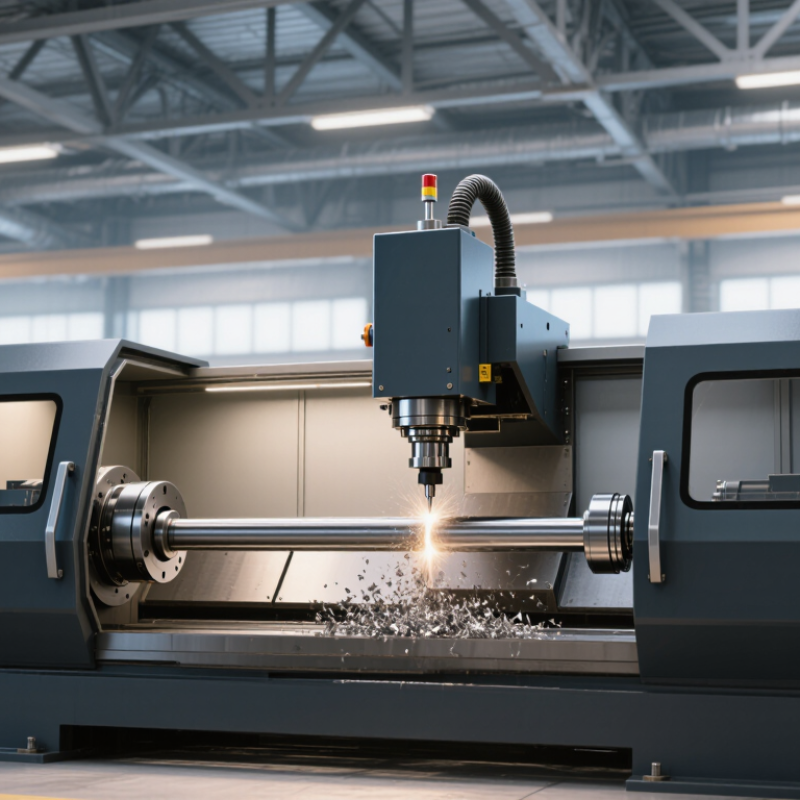
Large workpieces need more than a powerful spindle. A deep, rigid bed helps resist cutting forces and limits vibration when machining long shafts or heavy flanges. High-torque spindle drives maintain cutting power at lower speeds, while a suitable chuck and tailstock support the work securely. These details matter: chatter can leave visible rings on a turned surface, even when the machine appears stable.

The control system coordinates feed, speed, and tool movement, but it cannot compensate for poor workholding. Coolant delivery helps manage heat at the cutting edge, and effective chip removal keeps long, hot chips away from the tool and finished surface. The U.S. Energy Information Administration’s 2018 Manufacturing Energy Consumption Survey reported that machine-drive systems used 53% of manufacturing electricity. That figure covers manufacturing broadly, not lathes alone, but it reinforces the value of checking drive efficiency alongside cutting capacity. Bigger is not automatically better. A machine that is oversized for typical jobs may add cost without improving results.

Tips: Match the chuck, tailstock, and steady-rest capacity to your heaviest and longest parts. Check spindle torque at the speeds you actually use, not only peak power. Run a test cut; real vibration can expose what a specification sheet misses.

Why Choose a Heavy-Duty CNC Lathe for Your Business?

How its core systems support large and demanding parts

A heavier workpiece calls for a rigid bed, a high-capacity spindle and chuck, and stable support during cutting. These representative capacity ranges are illustrative, not specifications for every machine; actual limits depend on the model, workholding, and setup.

Which Business Benefits It Can Provide

A heavy-duty CNC lathe can support longer production runs, larger workpieces, and demanding cuts without relying on repeated manual adjustments. For a shop machining steel shafts, this may mean steadier cycle times and fewer interruptions to reset a part. The benefit is practical: more predictable scheduling. Still, results depend on suitable tooling, operator skill, and maintenance; a rigid machine cannot correct a poor process.

Labor capacity matters, too. Deloitte and The Manufacturing Institute’s 2024 workforce study estimates that U.S. manufacturing may need 3.8 million additional workers by 2033, with 1.9 million jobs at risk of going unfilled. CNC automation can help experienced operators oversee repeatable work and focus attention on setup or inspection, rather than every cutting move. Fewer surprises. A lathe’s capacity may also let businesses take on larger components in-house, reducing outside processing steps and transport between suppliers. These gains are not automatic: tooling costs, programming time, and floor-space requirements deserve careful review. A realistic test is to compare actual part sizes, cycle times, changeovers, and maintenance needs against current orders before investing.

How to Match Machine Capacity to Production Needs

Why Choose a Heavy Duty CNC Lathe for Your Business?
How to Match Machine Capacity to Production Needs

A heavy-duty CNC lathe should fit the parts you actually make, not just the largest part on a sales drawing. Start with your usual material, maximum diameter, workpiece length, and expected batch size. Measure twice. Check the machine’s swing, bed length, spindle bore, and chuck capacity against those dimensions. Leave room for the chuck, tooling, and safe loading; a workpiece that barely fits on paper can be awkward to run.

Capacity also means sustained performance. Compare spindle torque and power at the speeds your materials require, especially when roughing large steel parts. Review duty-cycle guidance and realistic cutting data, rather than relying only on peak horsepower. Small details matter. A larger spindle bore may simplify bar work, while a suitable tool turret can reduce changeover time. Yet extra capacity brings higher costs, more floor space, and potentially greater power needs.

Use recent job records to estimate cycle times, setup frequency, and weekly machine hours. Then test a representative part with the intended tooling and workholding. A planning estimate can still miss chip buildup or a slow loading step; that is worth revisiting before purchase. Consider likely growth, but avoid paying for capacity that will sit unused. Check the foundation, access for maintenance, and operator workflow too. A lathe can meet every cutting requirement and still disrupt production if parts are difficult to load.

Why Choose a Heavy Duty CNC Lathe for Your Business? — Matching Machine Capacity to Production Needs
Production Profile Typical Workpiece Size Indicative Lathe Capacity Suitable Production Pattern Capacity-Matching Check Why Heavy-Duty Capacity May Help
Small components and frequent changeovers Parts up to about 200 mm (8 in) diameter; short bar-stock runs Approximately 250–400 mm (10–16 in) swing; spindle bore around 40–65 mm (1.6–2.6 in) High-mix, low-to-medium-volume work with varied setups Compare the largest part diameter and bar size with chuck, spindle-bore, and tool-clearance limits. A larger machine may be unnecessary unless future part sizes or cutting loads are expected to increase.
General industrial production Parts around 200–400 mm (8–16 in) diameter; moderate-length shafts Approximately 400–600 mm (16–24 in) swing; spindle bore around 65–100 mm (2.6–3.9 in) Recurring batches, mixed materials, and regular daily operation Check maximum turning diameter, distance between centers, chuck size, and required bar capacity. Greater frame and spindle capacity can support heavier cuts and reduce the need to split work across machines.
Heavy components and demanding cuts Parts around 400–700 mm (16–28 in) diameter; large or heavy workpieces Approximately 600–900 mm (24–35 in) swing; spindle bore around 100–150 mm (3.9–5.9 in) Medium-volume production involving tough alloys, large stock, or substantial material removal Confirm workpiece weight, chuck and spindle load limits, cutting torque, bed length, and foundation requirements. A rigid machine with suitable torque and mass can help maintain stability during heavy roughing cuts.
Large-diameter or long-shaft work Parts above roughly 700 mm (28 in) diameter, or long shafts requiring extended support Typically 900 mm (35 in) or greater swing; spindle bore and center distance selected for the part Specialized, lower-volume work or planned production of oversized parts Assess actual part envelope, steady-rest needs, tailstock capacity, lifting access, and shop-floor space. Purpose-sized capacity can accommodate large workpieces, but oversized equipment may increase purchase and operating costs.
Continuous or multi-shift production Determined by the part family and required stock size Capacity matched to the largest routine part, with suitable spindle power, torque, and cooling Long production runs, repeated heavy cuts, or high machine utilization Evaluate duty cycle, thermal stability, chip handling, coolant delivery, service access, and automation compatibility. Machines designed for sustained cutting can support uptime when paired with appropriate tooling, maintenance, and process planning.
Capacity figures are indicative planning ranges, not universal machine specifications. Actual swing, turning diameter, spindle bore, power, torque, workpiece weight, and duty limits vary by machine configuration. Select capacity using the largest routine part, material, cutting process, production volume, and a realistic allowance for future work.

What to Evaluate Before Purchase and Installation

Before buying a heavy-duty CNC lathe, match its working envelope to real parts, not the largest part your sales team might win someday. Check maximum turning diameter, bed length, spindle bore, chuck capacity, and bar-feeder clearance. Ask the supplier to demonstrate your material, cutting depth, and tolerance requirements. A thick-walled steel shaft may need different torque and rigidity than an aluminum component. Small details matter. Also confirm foundation loading, floor access, power supply, compressed air, coolant handling, and space for maintenance doors to open fully. A machine that fits on paper can still block a forklift aisle.

Installation planning should include staffing and training. Deloitte and the Manufacturing Institute’s 2024 workforce study estimated that U.S. manufacturing may need 3.8 million workers by 2033, with 1.9 million positions potentially unfilled. That is a workforce projection, not proof that automation will solve a hiring problem. Evaluate control usability, setup time, tool-change procedures, and the skills your operators already have. AMT’s 2023 U.S. Manufacturing Technology Orders report recorded about $4.9 billion in orders, down 12.8% from 2022. Market figures cannot determine whether a particular lathe is a sound investment, but they make disciplined cost comparisons worthwhile. Include tooling, rigging, operator training, preventive maintenance, and expected downtime in the quote review. One weak spot: installation estimates can look precise before the site is inspected. Get the floor and utility requirements verified in person.

FAQS

What makes a CNC lathe heavy-duty?

It repeatedly cuts large, demanding workpieces with limited vibration or dimensional drift. The label alone proves little.

Which specifications should buyers check?

Review swing, turning diameter, bed length, spindle bore, chuck capacity, and rated workpiece load. Check each against your actual parts.

Why does low-speed spindle torque matter?

It helps maintain cutting force when roughing steel shafts or large flanges. Peak horsepower is only part of the picture.

How can the machine reduce chatter?

A wide, ribbed bed, strong spindle bearings, and a rigid turret help resist cutting forces. Chatter can leave rings.

What support systems matter for long or heavy parts?

Match the chuck, tailstock, and steady rest to the part’s weight and length. Secure support matters.

Can a control system compensate for weak workholding?

No. It coordinates tool movement, feed, and speed, but cannot make an unstable workpiece secure.

Why are coolant and chip removal important?

Coolant manages heat at the cutting edge. Chip removal keeps long, hot chips away from tools and finished surfaces.

Does a larger machine always improve production?

No. An oversized machine can add cost without improving typical jobs. Bigger is not automatically better.

How can buyers check real cutting performance?

Ask for a test cut on a demanding routine job. Watch for vibration and dimensional changes; a spec sheet may miss them.

Conclusion

A Heavy Duty Cnc Lathe is designed to machine large, heavy, or demanding workpieces with the strength and stability that lighter equipment may not provide. Its rigid structure, powerful spindle, reliable tooling, and precise control systems work together to support consistent cutting performance and accurate results, even under substantial loads. These capabilities can help businesses improve productivity, handle a wider range of jobs, reduce unnecessary delays, and maintain dependable quality across production runs.

Choosing the right machine means matching its work envelope, load capacity, power, and precision to the parts and volumes your business expects to produce. Before purchasing, consider material types, production goals, available floor space, installation requirements, operator training, maintenance needs, and long-term operating costs. A well-matched machine can support current demands while leaving room for future growth, making it a practical investment for businesses that regularly work with large or challenging components.


Amelia

Amelia

Amelia is a seasoned marketing professional with a wealth of expertise in our company’s core offerings. With an unwavering passion for driving growth and innovation, she plays a pivotal role in shaping our marketing strategies and enhancing brand visibility. A key aspect of her responsibilities......