Horizontal Cnc Boring Machine technology remains vital for large, heavy, and geometrically complex components. These machines cut steel bases, turbine housings, transmission cases, and welded structures. Their horizontal spindle reaches deep cavities while the workpiece stays firmly supported. That stability matters when boring a 400-millimeter hole or machining a two-meter casting.
Market evidence supports this continuing demand. Grand View Research valued the global machine tools market at approximately USD 86.3 billion in 2023. Its report also forecasts steady growth through 2030, driven by aerospace, automotive, energy, and industrial equipment production. The American Machine Tool Distributors’ Association and Oxford Economics likewise track resilient investment in advanced machining capacity. However, broad machine-tool statistics do not isolate horizontal boring machines. That limitation deserves attention.
Professor Yusuf Altintas, a leading machining researcher, explains the practical priority clearly: “The cutting process is the heart of machining.” His work connects spindle behavior, tooling, vibration control, and dimensional accuracy. Those factors separate a productive Horizontal Cnc Boring Machine from an expensive idle asset.
This guide examines ten major machine types and their working strengths. It considers table size, spindle travel, rotary positioning, automation, and typical workloads. A floor-type model may suit long structural parts. A table-type design may offer stronger support for compact castings. A planer-type machine can handle enormous components, but it requires serious floor planning.
No single type wins every application. Tooling costs, operator skill, coolant control, and maintenance can change the result. Sometimes, the “best” machine is simply the one that reduces repositioning. That sounds obvious. In practice, it is often missed.
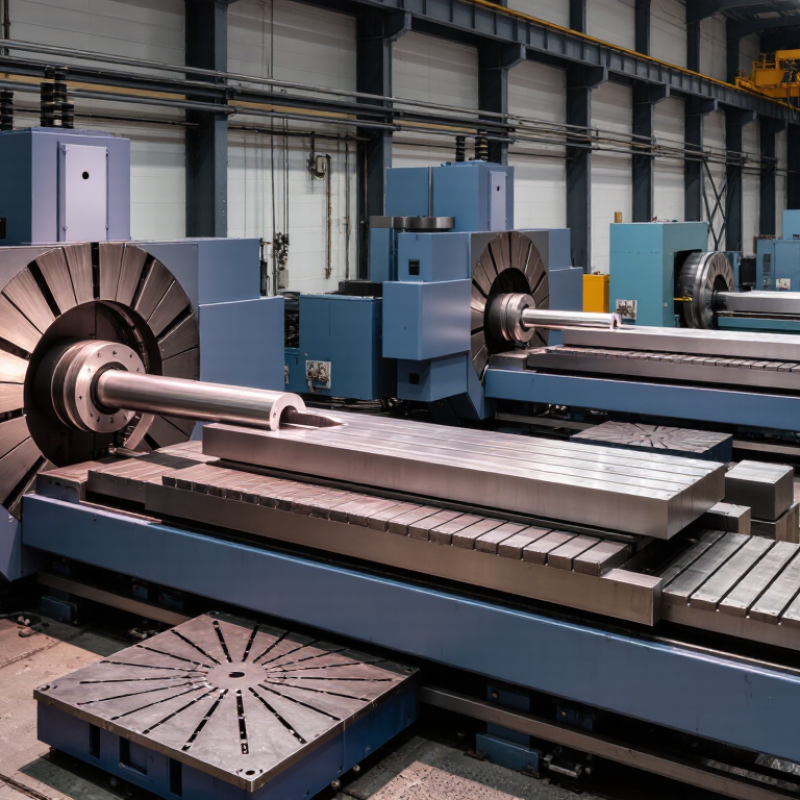
Horizontal CNC boring machines are classified by structure, workholding method, and spindle movement. In practice, the “top ten” types are table-type, floor-type, planer-type, ram-type, non-ram, fixed-column, moving-column, traveling-column, rotary-table, and heavy-duty boring machines. These categories often overlap. That is normal.
A table-type machine moves the worktable under a fixed or adjustable spindle. It suits medium-sized parts and offers familiar setup control. Floor-type models keep large components on the shop floor, reducing lifting problems. Planer-type machines support long beds and wide workpieces. Ram-type machines extend the spindle housing for deeper reaches, although rigidity may decrease at full extension. Non-ram designs remain stiffer but provide less reach. Fixed-column machines prioritize stability, while moving-column versions cover larger work envelopes. Traveling-column layouts move along the bed, helping operators machine several positions without repeated clamping.
Rotary-table machines rotate the workpiece for angular holes, faces, and bolt patterns. Heavy-duty models use reinforced beds, powerful drives, and larger spindles for castings or welded structures. From my experience, classification should not rely on one label. A rotary table may appear on a table-type or moving-column machine. Check spindle diameter, travel, table load, and thermal control. Small details matter. I once treated reach as the main selection factor and underestimated table deflection. That mistake caused extra alignment work. A reliable comparison also considers chip evacuation, probing access, fixture height, and operator visibility.
Common categories include table-type, floor-type, planer-type, and traveling-column machines. Ram-type, jig-boring, deep-hole, multi-function, precision, and heavy-duty models are also common. Categories can overlap.
It suits large, heavy workpieces needing stable positioning. Its table travels along the bed, while the cutting structure stays relatively rigid. It handles deep boring and face milling well. Poor fixturing still causes trouble.
The workpiece remains fixed while the column moves along precision rails. This reduces repositioning for long frames, welded structures, and large machine bases. A several-meter steel frame can stay on one datum. Rail alignment matters greatly.
Compare workpiece mass, accuracy, access, table load, spindle reach, and production rhythm. Also check repeatability, thermal compensation, tool-change capacity, and service access. Spindle power is not enough. That is often underestimated.
Deep-hole boring machines use long tooling, coolant delivery, and controlled chip removal. Ram-type machines can also reach deep internal features. Shorter tools may improve rigidity when the cavity allows them. Long tools can vibrate.
It combines boring, milling, drilling, and tapping in one setup. This can reduce handling time and repeated alignment work. It works well when several operations share a stable datum. One setup is not always best.
Secure the workpiece firmly and verify datum stability before cutting. Use probe readings to confirm alignment near the workpiece. Check spindle extension, column clearance, and fixture interference. Small errors grow inside long bores.
Temperature changes can influence accuracy and thermal behavior. Chips may damage movement areas or disturb cutting. Weak foundations can reduce stability, especially under heavy cuts. The floor matters.
A powerful machine may perform poorly on delicate jig-boring work. Fixtures can block spindle access, and operators may struggle to inspect the bore safely. Engineers should test vibration, chip evacuation, and bore size at production speed. Catalog descriptions can mislead.
Horizontal Cnc Boring Machine systems are classified according to their structural design, workpiece support, column movement, and machining purpose. The main categories include table-type and floor-type machines, which differ in how the workpiece is positioned and moved. Planer-type and traveling-column models provide different approaches to handling large or heavy components, while ram-type, fixed-column, and twin-column configurations offer varied levels of rigidity, reach, and stability for demanding operations.
Specialized designs further expand the capabilities of these machines. Jig boring machines focus on accurate hole positioning, deep-hole models are built for extended internal machining, and multi-function machines combine boring with operations such as milling, drilling, and tapping. Understanding these ten types helps manufacturers select the right Horizontal Cnc Boring Machine according to workpiece size, required precision, machining depth, production needs, and available workspace. Each configuration has distinct advantages, making proper classification essential for efficient and reliable machining.

 XINSHIHENG