Choosing a reliable Lathe Machine manufacturer is rarely as simple as comparing prices. Global buyers must examine accuracy, rigidity, spindle performance, control systems, and after-sales support. A polished catalog cannot replace verified production evidence.
Taiichi Ohno, a leading manufacturing expert, said, “Without standards, there can be no kaizen.” This principle applies directly to machine-tool purchasing. Buyers should request inspection reports, tolerance data, factory test procedures, and references from comparable industries. They should also check whether the manufacturer provides operator training, spare parts, remote diagnostics, and local technical assistance.
Small details matter.
A machine may promise high speed, yet struggle with vibration during heavy turning. Another may offer advanced automation, but require expensive maintenance or specialized programming. These gaps often appear after installation, not during a sales presentation. This article reviews top Lathe Machine manufacturers for global buyers through practical criteria, including engineering capability, manufacturing experience, quality control, customization, delivery reliability, and lifetime operating cost.
The strongest suppliers usually document their processes. They explain where components come from and how accuracy is maintained. However, no ranking is perfect. Market data changes, and customer requirements differ widely. A precision aerospace workshop may value thermal stability, while a general fabrication plant may prioritize ruggedness and simple operation.
Readers should treat manufacturer claims as starting points, not final proof. Independent audits, sample machining, and direct technical discussions remain valuable. A dependable Lathe Machine is not merely purchased; it is selected through careful questioning, realistic testing, and a clear understanding of production needs.
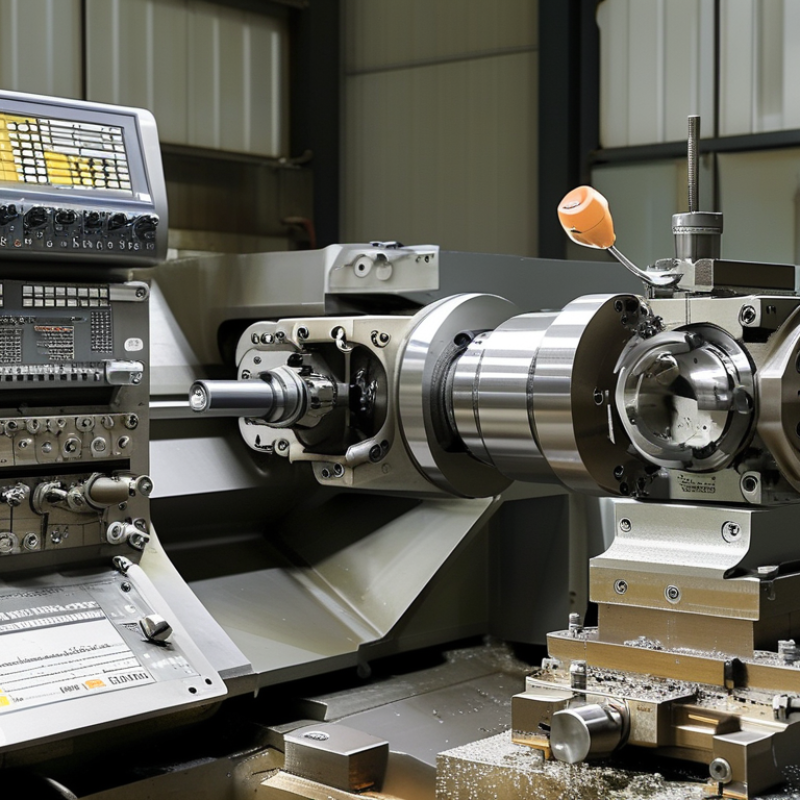
A lathe machine is a manufacturing tool that shapes a rotating workpiece with a controlled cutting tool. The workpiece may be metal, plastic, or another machinable material. Typical operations include turning, facing, threading, boring, and drilling. The machine removes material gradually, creating cylindrical or tapered surfaces.
Its role is fundamental in global manufacturing. Shafts, bushings, rollers, threaded parts, and precision fittings often begin on a lathe. In a production workshop, the chuck holds the raw bar while the spindle controls rotation speed. The cutting tool then travels along a programmed or manually guided path. Small changes in feed rate can affect surface finish, heat, and dimensional accuracy.
Precision needs evidence. Buyers should review tolerance data, spindle specifications, tooling support, maintenance records, and operator training requirements. A machine with strong power may still perform poorly if its guideways are misaligned. I have seen surface defects caused by worn tools, not weak machine frames. That detail is easy to miss. Regular inspection of chuck runout, lubrication points, and tool holders helps protect consistent output. Manual lathes suit flexible repair work, while CNC lathes support repeatable batches and complex profiles. However, automation does not remove every risk. Incorrect workholding, unstable materials, or poor program verification can still produce rejected parts. Global manufacturers must also consider electrical standards, technical service access, spare-part availability, and local skills before purchasing.
International lathe manufacturers offer several machine types for different production needs. Engine lathes remain practical for repair shops, prototypes, and short production runs. Operators can adjust speed, feed, and tooling directly, which helps when each workpiece differs. However, manual control depends heavily on operator skill.
CNC lathes suit repeatable production, especially when parts require consistent diameters, threads, or shoulders. Turning centers add powered tooling, automatic tool changes, and sometimes a second spindle. These features can reduce handling between operations. Vertical lathes hold large, heavy workpieces securely, making them suitable for flanges, rings, and industrial housings. Swiss-type lathes support slender, small-diameter components with strong guide-bushing control. They are useful for medical, electronics, and precision instrument parts, provided the programming and setup are carefully managed.
Multi-spindle lathes can produce high volumes efficiently, but their setup may require more planning and experienced technicians. Buyers should compare spindle power, maximum turning diameter, bar capacity, positioning accuracy, control functions, and local service support. Ask for a test cut using material similar to the intended workpiece. A polished demonstration part proves little if the cutting conditions are unrealistic. Lower purchase prices can also hide costly tooling, training, or maintenance needs. No machine fits every factory. A careful review of floor space, chip removal, coolant handling, and operator experience often reveals limitations that brochures overlook.
The chart compares representative maximum spindle-speed capabilities across common lathe categories. Actual specifications vary by machine size, tooling, material, and configuration. CNC and Swiss-type lathes generally support higher-speed, automated production, while engine, toolroom, turret, and vertical lathes are selected according to workpiece size, precision, and production requirements.
Comparing lathe machine manufacturers requires more than reading catalog specifications. In a real workshop, spindle runout, bed rigidity, and thermal stability affect every finished part. Ask for measured data, not broad claims. A reliable supplier can provide inspection reports, material certificates, and repeatability results from recent production. Request a sample cut on steel or aluminum. Watch chip control, surface finish, vibration, and temperature changes during a long cycle. Small details often reveal engineering discipline.
Manufacturer experience should match the intended work. A company producing compact units may not understand heavy shaft turning. Check machine sizes, supported materials, control systems, and tooling options. Review installation records from facilities with similar loads. Technical staff should explain maintenance intervals in practical terms. Ask how quickly they provide replacement parts and remote diagnosis across time zones. Service promises matter only when response procedures are documented and tested.
Price deserves careful comparison, but the cheapest quotation can hide weak calibration or limited support. Compare total ownership costs, including training, tooling, energy use, software updates, and downtime. Verify certifications through traceable documents, and contact previous buyers when possible. I once underestimated operator training; the machine was accurate, yet setup errors caused scrap. That mistake changed my checklist. It now includes training hours, acceptance testing, and clear responsibility for unresolved defects. No checklist is perfect. Review it after every project.
Leading lathe machine manufacturers differ by region, application, and production scale. East Asian suppliers often focus on high-volume CNC turning, compact footprints, and competitive automation. European manufacturers commonly emphasize precision, thermal stability, and complex multi-axis work. North American producers frequently serve aerospace, energy, and heavy industrial applications with rigid, large-capacity machines. Indian manufacturers may offer practical configurations for general engineering and growing workshops.
Specialty matters more than country alone. A manufacturer experienced in automotive parts may not suit medical components or oversized shafts. Check spindle speed, swing diameter, bar capacity, tooling systems, and repeatability. Ask for test-cut results using material similar to yours. Reliable suppliers should provide installation guidance, operator training, maintenance schedules, and accessible spare parts. A polished brochure is not enough. Some buyers, including experienced teams, underestimate service response time.
Tips: Compare regional expertise with your actual workload. Request references from similar factories. Review electrical standards before ordering. Calculate shipping, commissioning, and tooling costs. Inspect sample surfaces under real lighting. Small details matter. If possible, schedule a factory audit or live video inspection. Confirm warranty exclusions in writing. My view is slightly cautious: the cheapest machine can become expensive when software support, calibration, or replacement components are difficult to obtain. A clear specification sheet prevents many avoidable disputes.
Global Purchasing, Compliance, and Supplier Evaluation Guidelines
Buying a lathe machine globally requires more than comparing spindle speed and price. Verify the machine’s intended use, voltage, control system, and applicable conformity requirements in the destination market. Request a complete technical file, including drawings, manuals, risk assessments, and inspection records. For electrical equipment, confirm local safety rules before signing the purchase contract.
Supplier evaluation should combine documents with physical evidence. The 2022 ISO Survey recorded more than 1.26 million ISO 9001 certificates worldwide, but certification alone does not prove machining quality. Ask for recent process-control records, calibration certificates, and a factory acceptance test. Measure spindle runout with a test bar. Check repeatability across several cycles. Small details matter. The World Bank’s 2023 Logistics Performance Index covered 139 economies and highlighted tracking, customs, and delivery reliability as major trade factors. These points deserve written service-level terms, not casual promises.
Tips: Compare at least three suppliers using one scoring sheet. Check legal entity details, export experience, spare-parts response time, and payment protections. Require photos of serial plates and final packaging. A video call is useful, though it is not an audit. Some buyers overvalue polished websites and undercheck subcontracted components. That mistake can become expensive. Keep records of every clarification, because unclear specifications often create disputes after shipment.
| Evaluation Area | Benchmark or Requirement | Recommended Verification Evidence | Buyer Risk Controlled |
|---|---|---|---|
| Machine Category | Select between manual engine lathe, CNC turning center, slant-bed CNC lathe, Swiss-type lathe, or heavy-duty oil-country lathe according to workpiece size, tolerance, production volume, and automation needs. | Application review, sample drawings, cycle-time estimate, tooling plan, and written confirmation of the machine configuration. | Prevents purchasing a machine that is unsuitable for the required material, diameter, length, or production quantity. |
| Typical Work Envelope | For general CNC turning, common small-to-medium production models typically provide approximately 200–800 mm swing over bed and 300–1,500 mm maximum turning length. Actual capacity varies by design. | Official machine drawing showing swing, maximum turning diameter, maximum turning length, bar capacity, chuck size, and tailstock dimensions. | Reduces dimensional mismatch and unexpected restrictions caused by chucks, tooling, tailstocks, or workholding systems. |
| Spindle and Drive | Confirm spindle speed range, continuous and peak spindle power, torque curve, spindle nose standard, bore diameter, and speed suitability for steel, stainless steel, aluminum, or titanium. | Motor datasheet, spindle-performance chart, spindle-nose specification, factory test report, and material-specific cutting trial. | Controls insufficient cutting power, chatter, thermal overload, and inability to use the buyer’s existing workholding equipment. |
| Accuracy and Repeatability | Specify positioning accuracy and repeatability separately for each linear axis. Acceptance should be based on a defined test method, environmental condition, and measurement instrument. | Machine-tool accuracy test report, laser-interferometer or calibrated-ballbar results where applicable, and a buyer-approved sample-part inspection. | Limits disputes caused by undefined accuracy claims and verifies whether the machine can meet the production tolerance. |
| Control and Automation | Evaluate CNC control functions, conversational programming, tool-offset management, probing compatibility, chip monitoring, bar feeding, parts catching, and communication interfaces. | Control-system specification, software-function list, demonstration video or live acceptance test, network requirements, and backup procedure. | Avoids hidden software limitations, integration problems, and dependence on unsupported control functions. |
| Safety Compliance | Require risk assessment, interlocked guarding, emergency stops, safe access, electrical protection, chip and coolant containment, and safety instructions appropriate to the destination market. | Declaration of conformity where applicable, risk-assessment summary, electrical diagram, safety-circuit validation, user manual, and inspection checklist. | Reduces regulatory, workplace-safety, insurance, and commissioning risks. |
| Applicable Standards | Use ISO 23125 for safety requirements of turning machines, ISO 230 series methods for machine-tool testing, and the electrical and electromagnetic-compatibility standards required in the destination market. | Standards compliance matrix identifying the edition, scope, test method, responsible party, and supporting test records. | Prevents incomplete or non-equivalent compliance claims during import, installation, or customer audits. |
| Regional Regulatory File | For the European market, verify the machinery conformity route applicable at the delivery date; also review EMC, electrical safety, technical documentation, and language requirements. | Technical file index, declaration document, risk assessment, user manual, labels, wiring diagrams, and destination-country language versions. | Controls customs delays, installation restrictions, market-surveillance action, and documentation gaps. |
| Electrical Compatibility | Confirm nominal voltage, frequency, phase arrangement, full-load current, short-circuit rating, transformer requirements, grounding method, and local plug or isolator configuration. | Electrical nameplate, power-consumption sheet, schematic diagram, utility requirements, and pre-installation checklist. | Avoids commissioning failure, electrical rework, nuisance trips, and damage caused by incompatible power supply. |
| Supplier Quality System | Prefer a documented quality-management system with controlled design changes, incoming inspection, process inspection, final testing, calibration control, and nonconformity management. | Current quality certificate, audit report, process-control plan, calibration records, corrective-action examples, and traceability procedure. | Reduces inconsistent build quality, undocumented changes, and repeat failures across multiple machines. |
| Factory Acceptance Test | Define dimensional accuracy, repeatability, spindle runout, geometric alignment, surface-finish target, cycle time, alarm checks, safety checks, and sample-part acceptance before shipment. | Signed FAT protocol, calibrated measurement records, sample-part inspection report, photographs, and open-issue log. | Moves acceptance risk to the supplier’s facility and provides objective evidence before final payment. |
| Installation and Site Acceptance | Specify foundation, floor loading, leveling procedure, environmental conditions, lifting points, coolant handling, compressed air, exhaust, and operator training. | Installation manual, site-readiness checklist, leveling record, commissioning report, training attendance record, and SAT results. | Prevents delays, poor accuracy caused by installation, unsafe lifting, and unclear commissioning responsibility. |
| Service and Spare Parts | Assess local service coverage, remote diagnostics, response time, spare-parts availability, recommended stock list, software support, and expected service life of critical components. | Service-level agreement, escalation contacts, spare-parts quotation, lead-time commitments, maintenance schedule, and technician qualification records. | Controls downtime, long repair lead times, and total-cost-of-ownership escalation. |
| Commercial Terms | Compare total landed cost rather than machine price alone, including tooling, freight, insurance, duties, installation, training, spare parts, software, and payment-security provisions. | Itemized quotation, Incoterms® 2020 term, packing specification, delivery schedule, warranty terms, payment milestones, and liquidated-damages clause. | Reduces unexpected import costs, delivery disputes, and exposure before successful acceptance. |
| Export and Import Documentation | Prepare commercial invoice, packing list, transport document, country-of-origin information, customs classification, insurance documents, and any required export or import licenses. | Document checklist reviewed by the buyer, freight forwarder, customs broker, and relevant authorities before dispatch. | Minimizes customs holds, incorrect duty assessment, and shipment-release delays. |
| Supplier Due Diligence | Evaluate legal registration, ownership transparency, production capability, financial stability, export experience, subcontracting controls, sanctions screening, and business continuity. | Corporate documents, factory audit, capacity evidence, customer references, bank or trade references, sanctions-screening record, and business-continuity plan. | Reduces fraud, supply interruption, unauthorized subcontracting, and contractual enforceability risks. |
| Sustainability and Responsible Sourcing | Review energy consumption, coolant and chip management, restricted substances, packaging materials, labor practices, and environmental permits where relevant. | Environmental policy, waste records, material declarations, supplier code of conduct, audit results, and energy-consumption data. | Supports customer sustainability requirements and reduces environmental, labor, and reputational exposure. |
: It rotates a workpiece while a cutting tool removes material. Common operations include turning, facing, threading, boring, and drilling. Cylindrical parts are typical results.
Many lathes process metal, plastic, and other machinable materials. The correct tool, speed, and feed depend on the material. Material behavior can surprise you.
Shafts, bushings, rollers, threaded parts, and precision fittings often begin there. The chuck holds the raw bar. The spindle controls rotation, while the tool follows a guided path.
Manual lathes suit repairs, prototypes, and changing one-off jobs. CNC lathes support repeatable batches and complex profiles. Automation still needs careful programming and supervision.
Compare spindle speed, swing diameter, bar capacity, tooling, and repeatability. Also review tolerances, power requirements, guideway condition, and service support. Strong power alone proves little.
Request test cuts using material similar to your production work. Measure spindle runout with a test bar. Check repeatability across several cycles. Inspect sample surfaces under real workshop lighting.
Review legal entity details, export experience, service response, and spare-part access. Request manuals, drawings, inspection records, and calibration evidence. A video call helps, but it is not an audit.
Include shipping, customs, commissioning, tooling, training, maintenance, and replacement components. Confirm voltage and electrical requirements before signing. The cheapest machine may cost more later. That possibility deserves honest reflection.
Worn tools can create surface defects, even with a strong machine frame. Inspect chuck runout, lubrication points, and tool holders regularly. Training reduces setup mistakes. No system is perfect.
A Lathe Machine is a core piece of manufacturing equipment used to rotate a workpiece while cutting tools shape it into precise cylindrical, tapered, threaded, or contoured components. This overview explains the main types available from international manufacturers, including engine lathes, CNC lathes, turning centers, automatic lathes, and specialized models. Each type serves different production needs, from flexible job-shop machining to high-volume industrial manufacturing.
For global buyers, selecting the right supplier requires more than comparing price. Important factors include machine accuracy, rigidity, spindle performance, automation, energy efficiency, after-sales service, spare-parts availability, and customization capability. The article also considers regional manufacturing strengths and specialty applications, while outlining practical steps for international purchasing. Buyers should evaluate technical documentation, quality systems, testing procedures, delivery terms, installation support, warranty coverage, and applicable import, safety, and compliance requirements before making a final decision.

XINSHIHENG