Investing in a CNC Heavy Duty Lathe can significantly impact your business operations. These machines offer precision and reliability for various industries. They are designed to handle heavy materials while delivering exceptional performance.
CNC Heavy Duty Lathes stand out for their robust construction and advanced technology. Their ability to perform complex machining tasks allows businesses to produce high-quality components swiftly. This efficiency can lead to improved productivity and reduced downtime. However, choosing the right machine involves careful consideration of your specific needs.
There are several options available in the market. Each comes with its own set of features and potential drawbacks. It's vital to weigh these factors against your production requirements and budget. A well-informed decision will ensure that your CNC Heavy Duty Lathe meets your expectations and helps you maintain a competitive edge in the industry.
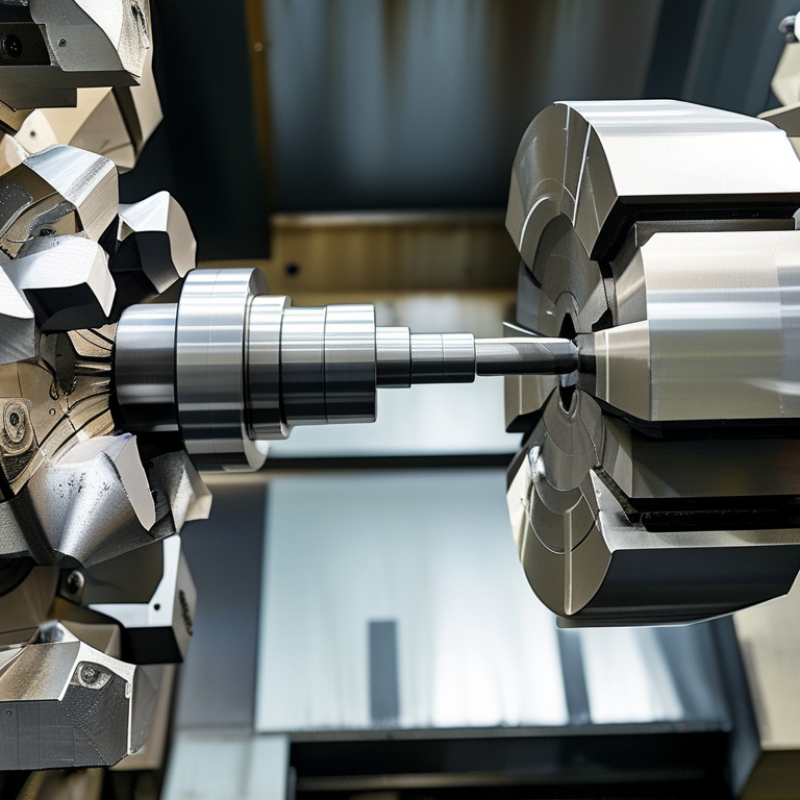
Understanding CNC Heavy Duty Lathes and Their Benefits
CNC heavy-duty lathes are essential in modern manufacturing. These machines offer precision and efficiency that manual lathes cannot match. According to a report from the International Federation of Robotics, CNC machinery has seen a 14% annual growth in adoption, highlighting the ongoing shift towards automated solutions.
One of the primary benefits of CNC heavy-duty lathes is their ability to handle complex shapes. They provide excellent repeatability and surface finishes, which is vital for industries like aerospace and automotive. A survey by Gardner Business Media shows that manufacturers using CNC tools reported a 30% increase in productivity on average. This allows businesses to meet tighter deadlines and improve profit margins.
Tips: When selecting a CNC lathe, consider the maximum spindle speed. Higher speeds reduce cycle time but require optimal tooling and setup. Also, review the software capabilities; more advanced programs support a wider range of applications.
However, transitioning to CNC can present challenges. Training staff and integrating new systems may take time and resources. A study from the American Society of Mechanical Engineers indicated that companies faced a steep learning curve, especially with programming. Evaluating your current workforce's capabilities can provide insights on whether additional training is necessary.
Key Features of CNC Heavy Duty Lathes for Business Applications
CNC heavy duty lathes are essential for various industries like aerospace, automotive, and manufacturing. They provide precision and durability that regular machines often lack. According to a report by MarketsandMarkets, the global CNC lathe market is projected to reach $2.63 billion by 2025, highlighting the rising demand for these machines.
One of the key features of CNC heavy duty lathes is their robust construction. These machines are designed to withstand high torque and heavy workloads. This durability ensures that they can handle larger workpieces with ease. Additionally, the automation capabilities enhance production efficiency, reducing manual labor and errors. Many users report a significant increase in output, sometimes up to 30%.
Another feature to consider is the advanced control systems. Modern CNC lathes often incorporate sophisticated software for programming complex tasks. This allows for greater customization and flexibility. Users can adjust settings quickly, adapting to various production needs. However, the initial investment can be high. Companies must weigh the benefits against costs. Regular maintenance is also crucial; neglecting it can lead to operational failures and costly downtime.
Comparative Analysis: CNC Heavy Duty Lathes vs. Traditional Lathes
CNC heavy-duty lathes have become increasingly popular in various industries. Their advantages over traditional lathes are significant. For instance, CNC lathes offer precision. They can produce complex shapes with minimal error. This level of accuracy often means fewer defects in the final product. That's important for maintaining quality standards.
On the other hand, traditional lathes rely heavily on manual operation. This can lead to inconsistencies, especially for large production runs. Operators must have extensive skills, which can limit availability. A lack of automation in traditional methods may also lead to longer production times. Moreover, there's the risk of human error impacting overall efficiency.
However, it's crucial to reflect on the initial investment. CNC heavy-duty lathes typically cost more upfront compared to traditional options. Not every business may be ready for such a financial commitment. Yet, the long-term benefits, such as increased output and reduced waste, often outweigh the cost. Businesses need to carefully evaluate their specific requirements before choosing the right lathe.
Comparison of CNC Heavy Duty Lathes and Traditional Lathes
Cost-Effectiveness: Long-Term Investment of CNC Heavy Duty Lathes
CNC heavy-duty lathes are a wise investment for businesses prioritizing efficiency and cost-effectiveness. A recent industry report highlighted that companies using CNC lathes can see a productivity increase of up to 30%. This efficiency translates to lower operational costs over time, making them an attractive option for various manufacturing sectors.
Investing in a CNC heavy-duty lathe means considering long-term benefits. While the initial cost may seem high, a properly maintained machine can last for decades. According to market research, the return on investment (ROI) for CNC machines can reach 75% within three to five years. This makes them a more economical choice compared to traditional lathes.
Tip: Regular maintenance is crucial. Small, consistent upkeep can prevent expensive repairs down the line.
Moreover, using these machines enhances precision and reduces waste, leading to further savings. Companies have reported decreases in material costs by up to 20% due to improved accuracy. However, the technology’s complexity can pose challenges. Staff training requires attention to ensure all capabilities are effectively utilized.
Tip: Invest in comprehensive training programs for operators. Skilled workers maximize machine potential.
Applications of CNC Heavy Duty Lathes in Various Industries
CNC heavy duty lathes play a vital role in various industries. Their precision and strength accommodate the demands of heavy machining tasks. In the automotive sector, these lathes are essential for producing engine blocks and other critical components. They help ensure parts are manufactured with exact specifications, reducing waste and enhancing efficiency.
In the aerospace industry, CNC heavy duty lathes are used for crafting turbine housings and landing gear components. These parts must meet stringent quality standards for safety and performance. The accuracy of CNC technology allows for intricate designs that manual methods cannot achieve. However, the initial investment can be daunting for some businesses.
Manufacturing in heavy machinery also benefits from CNC lathes. This technology allows for better consistency in producing parts like gears and shafts. Yet, not every business sees immediate returns on this investment. Integrating CNC lathes requires training and adaptation. Companies must weigh these challenges against potential improvements in productivity and product quality.
FAQS
: CNC heavy-duty lathes are advanced machines that automate manufacturing processes, improving precision and efficiency.
They handle complex shapes and enhance surface finishes, especially useful in sectors like aerospace and automotive.
Manufacturers using CNC tools have experienced up to a 30% increase in productivity. This helps meet tighter deadlines.
Consider the maximum spindle speed. Higher speeds can reduce cycle time but need optimal tooling.
Training staff and integrating systems can be time-consuming, and a steep learning curve may arise.
Initial costs may be high, but long-term ROI can reach 75% within three to five years.
Regular maintenance prevents costly repairs, ensuring machines last longer and operate efficiently.
Yes, they can decrease material waste by up to 20% due to improved accuracy, leading to savings.
Invest in comprehensive training programs for operators to fully utilize machine capabilities.
The complexity of CNC machines can present challenges, necessitating ongoing learning and adaptation from staff.
Conclusion
CNC Heavy Duty Lathes are essential tools for businesses requiring precision machining and high productivity. Understanding their benefits reveals that these advanced machines offer increased accuracy and efficiency compared to traditional lathes. Key features such as automated controls, robust construction, and the ability to handle large workpieces make them ideal for various industrial applications.
Moreover, a comparative analysis highlights the long-term investment advantages of CNC Heavy Duty Lathes. Though the initial costs may be higher, their durability and the substantial reduction in labor and operational costs lead to significant savings over time. Industries ranging from aerospace to automotive heavily utilize CNC Heavy Duty Lathes, showcasing their versatility and indispensable role in modern manufacturing practices.

 XINSHIHENG