Choosing Cnc Lathes Machinery is a practical decision that can shape production quality, delivery times, and long-term operating costs. The right machine should match your materials, part sizes, tolerances, and expected workload. A compact two-axis lathe may suit repair work and small batches. A live-tooling CNC turning center may better support complex parts and fewer setups. The difference becomes visible on the shop floor.
Look beyond spindle speed and purchase price. Check the machine’s maximum turning diameter, bar capacity, chuck size, motor power, control system, and positioning accuracy. Review sample parts made from your actual materials, such as stainless steel, aluminum, or hardened steel. A polished brochure is not enough. Ask for test-cut data, maintenance records, operator training, and local service response times. Downtime has a real cost.
Think about tomorrow’s orders.
Your facility also matters. Measure doorways, floor strength, power supply, chip handling, coolant needs, and available operator space. Safety guards, emergency controls, and recognized compliance standards deserve careful attention. Experienced manufacturers can explain thermal stability, tooling compatibility, and realistic cycle times without hiding limitations. Still, every recommendation deserves verification. Sales estimates may appear optimistic, and your own production forecasts may be imperfect.
Choose with evidence. Compare total ownership costs, including tooling, energy, maintenance, software, training, and financing. A reliable machine is not always the cheapest option. It is the one that performs consistently under your real production conditions and can keep improving with your business.
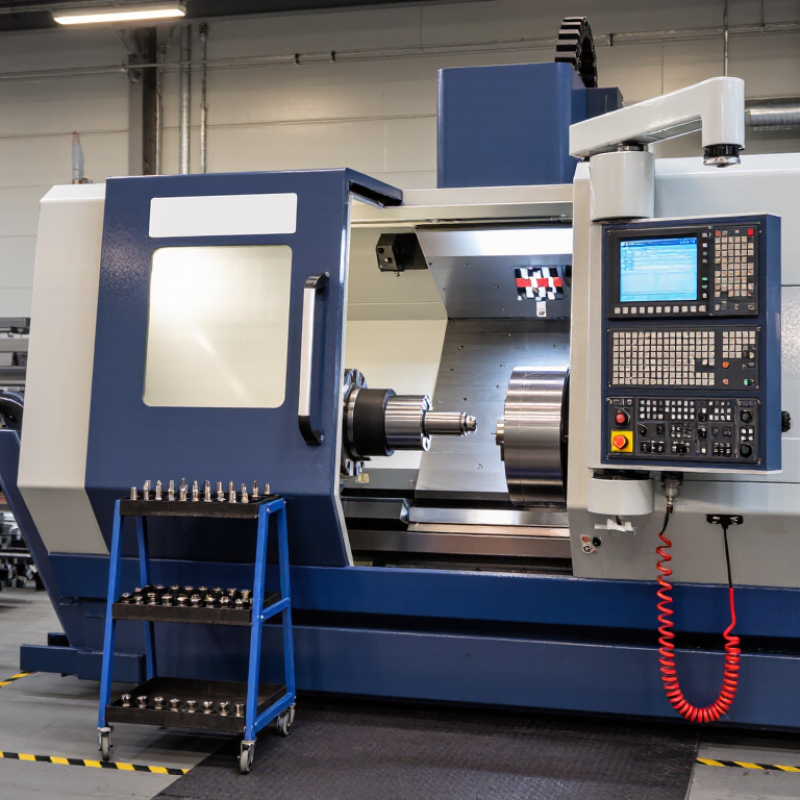
Choosing a CNC lathe starts with the parts you actually produce, not the machine’s impressive specifications. Record each workpiece’s diameter, length, material, tolerance, and expected batch size. A steel shaft may need stronger cutting power, while aluminum components often require higher spindle speeds. Check the largest chuck size and bar capacity carefully. An undersized machine can create delays, vibration, and repeated setups.
Your production goal should be measurable. Estimate daily output, available operator hours, cycle time, and acceptable scrap rates. Decide whether you need live tooling, automatic bar feeding, or a tailstock for long parts. Floor space, electrical supply, coolant management, and maintenance access also affect real productivity. A machine that fits the budget may still be impractical on a crowded shop floor.
Tips: Test representative materials before purchase. Request a sample cycle using your actual drawing and tolerances. Watch chip control, surface finish, tool access, and setup time. Ask for service response details and operator training. Do not trust a brochure alone.
I once focused too heavily on maximum spindle speed and overlooked setup flexibility. That decision looked efficient on paper but caused unnecessary changeovers. Review your forecasts honestly. Production volumes may rise, yet some custom work will remain unpredictable. Choose capacity with evidence, leaving room for future tooling and safer, more consistent operation.
Selecting a CNC lathe starts with the parts you actually produce. A two-axis lathe suits shafts, bushings, and basic external turning. A turning center adds milling, drilling, and automated tool changes. For complex parts, a mill-turn machine can reduce setups. Swiss-type lathes work well for small, slender components, but they may demand more specialized programming and maintenance.
Size affects both productivity and stability. Check maximum swing, turning diameter, bed length, and bar capacity carefully. A large machine is not always better. It can consume more floor space, energy, and labor than your workload justifies. Review spindle speed, torque, chuck size, turret stations, Y-axis travel, and live-tool capability. High speed helps small parts, while strong torque supports larger cuts. Accuracy also depends on machine rigidity, thermal control, tooling, and operator skill. Specifications alone can mislead.
Tips: Measure your largest part and your most common part separately. Ask for cutting trials using your real material. Check cycle time, surface finish, chip control, and tool wear. Leave capacity for future work, but avoid buying features you cannot use. More axes sound impressive. They can also create unnecessary complexity. A careful comparison often beats an ambitious guess.
Choosing a CNC lathe begins with the part, not the machine brochure. I have learned this after watching a fast machine struggle with a tight internal bore. Define required tolerances, surface finish, material hardness, and maximum workpiece size. Ask for measured test cuts, not impressive cycle-time claims. Precision needs evidence. Check spindle runout, axis repeatability, thermal stability, and tool-holding rigidity. A factory floor changes during a long shift. Request results from warm and cold conditions.
Speed matters, but only when it protects quality. Compare spindle range, acceleration, rapid traverse, and chip evacuation. A shorter cycle can lose money if operators stop for vibration or tangled chips. Review real production data from similar materials. Do not optimize for one perfect demonstration. Test it yourself. Record cycle time after several hours, not only during the first run.
Automation should reduce decisions, not hide them. Evaluate bar feeding, probing, tool monitoring, part catching, and remote alerts. The control system should show alarms clearly and preserve useful production records. Operators need simple offsets, guarded access, and recovery steps after an interrupted cycle. I once assumed more automation always meant better output. I was wrong. Choose well-documented interfaces when future integration matters. Before buying, run a pilot with your own material, tools, and programs. Record scrap, setup time, operator intervention, and dimensional drift. Numbers reveal weaknesses that sales language can hide.
| CNC Lathe Configuration | Typical Turning Capacity | Typical Spindle Speed | Positioning Accuracy | Repeatability | Rapid Traverse | Automation Options | Recommended Control Functions | Best Business Fit |
|---|---|---|---|---|---|---|---|---|
| Standard 2-Axis CNC Lathe | 250–500 mm swing; 300–750 mm turning length | 3,000–6,000 rpm | Approximately ±0.005–0.010 mm | Approximately ±0.002–0.005 mm | 12–24 m/min | Bar feeder, parts catcher, steady rest, chip conveyor | Canned turning cycles, tool-life management, spindle-load monitoring, USB or network data transfer | General job shops, repair parts, shafts, bushings, and low-to-medium batch production |
| Live-Tool Turning Center | 300–650 mm swing; 400–1,000 mm turning length | 3,500–8,000 rpm; driven tools commonly 4,000–12,000 rpm | Approximately ±0.003–0.008 mm | Approximately ±0.001–0.004 mm | 18–36 m/min | Bar feeder, parts catcher, robotic loading, automatic tool measurement | Polar interpolation, milling cycles, synchronized tapping, tool compensation, collision avoidance | Complex turned-and-milled components requiring fewer setups and shorter production flow |
| Y-Axis Multitasking Lathe | 350–750 mm swing; 500–1,200 mm turning length | 3,000–6,000 rpm; driven tools commonly 5,000–10,000 rpm | Approximately ±0.003–0.007 mm | Approximately ±0.001–0.003 mm | 20–40 m/min | Bar feeder, robotic cell, automatic probing, tool presetting, in-process measurement | Y-axis interpolation, coordinate rotation, probing cycles, synchronized spindle control, advanced tool management | High-value components with off-center drilling, milling, keyways, and reduced setup requirements |
| Swiss-Type CNC Lathe | 8–32 mm bar diameter; compact parts up to approximately 300 mm long | 6,000–12,000 rpm; some models exceed 15,000 rpm | Approximately ±0.002–0.005 mm | Approximately ±0.001–0.003 mm | 20–36 m/min | Bar feeder, automatic guide-bushing adjustment, parts conveyor, high-pressure coolant | Multi-channel synchronization, gang-tool management, thread-whirling or polygon turning support, tool monitoring | High-volume small precision parts for medical, electronics, instrumentation, and micro-mechanical applications |
| Heavy-Duty CNC Lathe | 600–1,500 mm swing; 1,000–4,000 mm turning length | 800–2,500 rpm | Approximately ±0.010–0.025 mm | Approximately ±0.005–0.015 mm | 6–15 m/min | Steady rest, hydraulic chuck, tailstock automation, chip conveyor, tool presetting | Constant surface speed, torque monitoring, rigid tapping, spindle orientation, large-part work-offset management | Large shafts, flanges, rollers, energy equipment, construction machinery, and low-volume heavy components |
| High-Production Twin-Spindle Lathe | 250–550 mm swing; 300–800 mm turning length | 4,000–8,000 rpm per spindle | Approximately ±0.003–0.008 mm | Approximately ±0.001–0.004 mm | 20–40 m/min | Automatic part transfer, bar feeder, parts catcher, robotic tending, in-process gauging | Spindle synchronization, transfer cycles, automatic work-offset updates, tool-life monitoring, production data collection | Repetitive medium-to-high-volume production where completed parts can be machined in one cycle |
How to Choose CNC Lathes Machinery for Your Business?
Purchase price is only the visible number. A practical evaluation must include electricity, tooling, coolant, labor, and planned downtime. The U.S. Department of Energy’s Improving Compressed Air System Performance guide reports that leaks can waste 20–30% of compressor output. Check air consumption during cutting, not only during demonstrations. DOE’s Operations and Maintenance Best Practices Guide also identifies potential energy savings of 5–20% through disciplined maintenance. These figures are useful, but actual savings depend on workload and operator habits.
Maintenance should be visible and measurable. Ask for service intervals, lubrication points, alarm histories, and replacement-part lead times. A machine that requires a specialist for every small adjustment may become expensive quickly. I would keep a simple paper checklist beside the control cabinet. Digital records are helpful, but they can hide missed inspections. Safety deserves equal scrutiny. OSHA’s annual Top 10 list repeatedly includes machine guarding and lockout/tagout violations. Test door interlocks, emergency stops, chip protection, and access around the chuck before purchase.
Supplier support must have clear terms. Request response-time targets, remote diagnostic procedures, training hours, and stocked critical parts. Measure the distance between your facility and qualified service personnel. A cheap machine with uncertain support can lose several production shifts after one sensor failure. Ask for references from similar operations, not polished showroom examples. No calculation is perfect. Review the estimate after three months of real production and correct the assumptions.
Choosing a CNC lathe requires more than comparing purchase prices. The right machine must fit your budget and support future production demands. Start by defining your workpiece diameter, length, material, tolerance, and expected monthly volume. A compact machine may suit prototypes, but limited capacity can become expensive when orders increase.
Calculate the total cost of ownership. Include tooling, installation, programming, maintenance, energy, training, and downtime. A lower-priced lathe may require costly upgrades later. Check spindle power, chuck size, turret capacity, axis travel, and control compatibility. Ask for cutting tests using materials similar to yours. Real chips reveal more than a specification sheet.
Plan for growth without buying excessive capacity. Leave room for automatic bar feeding, additional tooling, or a second shift. Service response also matters, especially when one machine carries your production schedule. In my experience, operators often value easier setup more than impressive specifications. I once underestimated training time, and the machine stood idle during the first week. That mistake changed how I evaluate equipment. Review sample programs, inspect finished parts, and speak with current users when possible. Be cautious with optimistic productivity estimates. Your actual results may differ because of operator skill, material variation, and setup complexity. Choose a machine that performs reliably today and can adapt tomorrow.
Record workpiece diameter, length, material, tolerance, and expected batch size. Measure your largest part and your most common part separately. Small details matter.
Estimate daily output, operator hours, cycle time, and acceptable scrap rates. A crowded floor may reduce real productivity, even with a fast machine. Plan honestly.
A two-axis lathe suits shafts, bushings, and basic external turning. It usually offers simpler programming and setup. Keep it practical.
A turning center can combine turning, drilling, milling, and automatic tool changes. It may reduce repeated setups for parts needing several operations. More features add complexity.
Check maximum swing, turning diameter, bed length, chuck size, and bar capacity. An undersized machine may cause vibration, delays, and repeated setups. Size can mislead.
High spindle speed often benefits small aluminum components and other smaller parts. Strong torque supports larger cuts and tougher materials. Speed is not everything.
Choose live tooling for milling or drilling during turning operations. Automatic bar feeding can support longer, repeated production runs. A tailstock helps support long parts. Match features to actual work.
Use your real material, drawing, and tolerances during a sample cycle. Observe chip control, surface finish, tool access, tool wear, and setup time. Brochures are not enough.
Leave room for future tooling and moderate production growth. Do not pay for unused axes or features without evidence. My first forecast may be wrong. Review custom work and changing volumes carefully.
Choosing the right Cnc Lathes Machinery begins with a clear understanding of your production requirements, including material types, component dimensions, machining complexity, expected output, and long-term business goals. You should compare available lathe types, working sizes, spindle capacity, tooling options, and technical capabilities to ensure the equipment matches both current orders and potential future projects. Precision, cutting speed, control systems, and automation features also play an important role in improving productivity, consistency, and ease of operation.
Beyond performance, evaluate the total cost of ownership. Consider energy use, tooling, maintenance, operator training, safety features, and the availability of technical support and spare parts. A reliable supplier should provide clear installation guidance, responsive service, and practical after-sales assistance. By balancing machine capability, operating expenses, workplace safety, and future expansion plans, you can select Cnc Lathes Machinery that fits your budget while supporting stable, efficient, and sustainable business growth.

XINSHIHENG