10 Best Turret Lathes for Industrial Buyers

Time:2026-11-10 Author:Charlotte
0%

Choosing a Turret Lathe is less about chasing the largest capacity and more about matching the machine to real production work. Buyers should compare spindle bore, swing, tooling stations, control options, and service support. A lathe that turns small steel fittings all day has different needs from one handling long shafts or frequent job changes. The details matter. A few millimeters of clearance can decide whether a part runs smoothly or needs another setup.

Machining educator Peter Smid is often associated with practical CNC training. A useful buying principle, consistent with that hands-on approach, is: “Choose the machine around the work, not the other way around.” Treat this as a guiding principle, not a verified quotation. In practice, review sample parts, tolerances, material, batch size, and operator experience before comparing models. Ask suppliers about repeatability under load, maintenance access, and local technical support. Request a demonstration using a representative job, if possible. Watch how quickly an operator can change tools and clear chips. Small delays add up.

This guide reviews ten turret lathes for industrial buyers, from straightforward production machines to more configurable systems. It weighs capability against floor space, upkeep, and purchase cost. No ranking can replace a shop trial. Specifications can look reassuring on paper; real parts sometimes disagree. That is worth remembering.
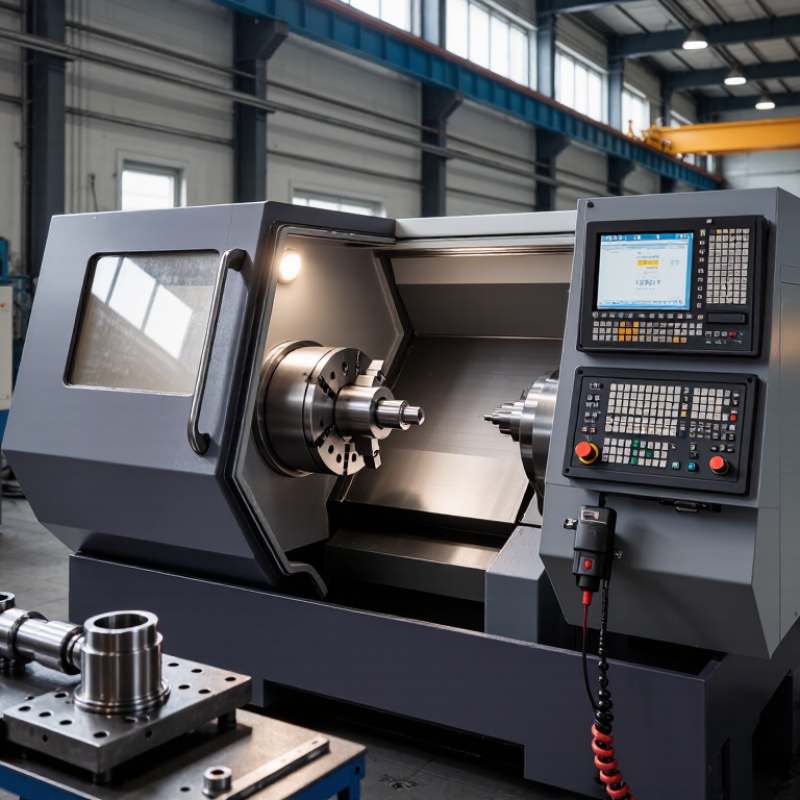
10 Best Turret Lathes for Industrial Buyers

Turret Lathe Fundamentals and Common Industrial Applications

A turret lathe is designed to perform several turning operations with fewer manual tool changes. Its turret holds multiple cutting tools and indexes them into position in sequence. One tool may face the end of a steel bar; another can drill, bore, or cut a thread. This setup suits repeat work, where consistent dimensions matter across a batch. It is less forgiving of poor setup than a one-off job might be. Tool alignment, workholding, and cutting conditions all affect the finished part.

Common industrial applications include producing bushings, pins, spacers, and stepped shafts. Bar-fed models can make many similar parts with limited interruption, while chucking models handle larger or irregular workpieces. Turret lathes are useful in maintenance shops and production departments, especially when jobs repeat often enough to justify setup time. In practice, that first setup may take longer than the production plan suggests. That happens.

Tips: Check tool clearance through the full turret sequence before cutting. Keep notes on tool order, speeds, and measured results. A small mismatch in tool height can leave a visible shoulder or rough surface. Inspect the first part carefully, then recheck dimensions during the run. Don’t assume every batch behaves exactly the same; material and tool wear can change the result.

Key Specifications for Evaluating Turret Lathes

For industrial buyers, a turret lathe’s headline capacity matters only when it matches the actual workpiece. Compare maximum turning diameter and length with your largest routine part, then check spindle bore against the bar stock you use. A tight bore can force extra handling. Measure it.

Turret capacity is not just a station count. Check tool positions, indexing time, live-tool capability, and whether the turret accepts your existing holders. For repeat batches, spindle speed range, motor power, and chuck limits should suit the material and cut depth. Ask for positioning accuracy and repeatability figures, and confirm how they were measured. A catalogue number alone is thin evidence.

Automation also affects the specification. The International Federation of Robotics reported 541,302 industrial robot installations worldwide in 2023 in World Robotics 2024. That figure covers all industrial robots, not turret lathes, but it underscores the value of checking interface readiness. Verify bar-feeder compatibility, chip clearance, coolant delivery, and control-system connections before purchase. Request a cutting trial using your material and tooling; record cycle time, surface finish, and tool wear. I would also inspect the chip conveyor in person. It is easy to overlook.

Ten Turret Lathes for Industrial Production

Industrial production rarely depends on one turret-lathe design. The right machine depends on part geometry, material, batch size, and changeover frequency. A compact horizontal model can suit smaller components, while a heavy-bed machine offers support for larger, vibration-prone cuts. Vertical designs can simplify loading bulky workpieces. CNC models help repeat programmed operations, while manual machines may still fit repair work and low-volume runs. They are not obsolete.

Ten useful configurations include compact horizontal, heavy-bed horizontal, vertical, manual, CNC, bar-fed, chucking, multi-spindle, twin-turret, and cell-integrated lathes. Bar-fed machines can reduce pauses between parts; chucking models suit components loaded individually. Multi-spindle designs can perform several operations in sequence, while twin-turret layouts may cut cycle time on suitable parts. Cell-integrated machines can link turning with automated loading. Each option has trade-offs. More stations do not automatically mean higher output.

Compare spindle bore, swing, turret capacity, workholding, and expected cutting forces against actual production parts. Ask for a trial using representative stock, tooling, and cycle conditions. Test the cycle. Record finished-part dimensions, chip control, and operator access—not just the quoted cycle time. A larger machine can consume valuable floor space, and a complex setup may slow changeovers. Those details are easy to underestimate.

10 Best Turret Lathes for Industrial Buyers - Ten Turret Lathes for Industrial Production

No. Turret Lathe Configuration Typical Turret Setup Workpiece and Capacity Fit Production Strength Best-Fit Applications
1 Conventional capstan lathe Ram-mounted hexagonal turret; commonly arranged for sequential tooling Small to medium bar stock and repeatable parts within the machine’s swing and stroke limits Quick tool indexing and efficient repetition of a fixed machining sequence High-volume batches of turned components requiring several successive operations
2 Conventional saddle-type turret lathe Turret mounted on a saddle that travels along the bed Medium to larger workpieces than are generally suited to a ram-type capstan setup Longer tool travel and support for heavier cuts than a typical capstan arrangement Job shops and production cells making larger repeat parts by turning, boring, drilling, and threading
3 CNC horizontal two-axis turret lathe One indexed turret for X- and Z-axis machining; station count varies by design Small to medium turned parts, including chucking work and bar-fed work when equipped for it Programmable cycles, consistent dimensions, and rapid repeat production General-purpose production of shafts, bushings, fittings, and other rotational components
4 CNC flat-bed turret lathe Turret on a flat-bed machine structure; tool arrangement depends on the model Medium or larger parts where access, setup flexibility, or workpiece handling is important Adaptable setup for varied jobs and easier access to the work area on suitable designs Mixed-batch production, repair work, and machining of larger components
5 CNC vertical turret lathe (VTL) Vertical work spindle with a turret or tool head arranged for vertical turning Large-diameter, heavy workpieces that are more practical to load and support vertically Gravity helps seat the workpiece on the table, supporting stable handling of heavy parts Discs, rings, large flanges, and other components with substantial diameter-to-length ratios
6 CNC twin-turret lathe Two turrets, commonly positioned to machine the work from different directions Parts suited to coordinated machining by two tool groups; usable envelope varies by machine Can perform operations in parallel and reduce cycle time when the process is balanced Repeat production of complex turned parts with multiple machining stages
7 CNC twin-spindle turret lathe Two spindles, typically with turret tooling; some designs transfer parts between spindles Small to medium components that can be machined on both ends or in successive spindle operations Enables front- and back-side operations without a separate manual re-clamping step Complete-part production of fittings, connectors, and components requiring end-face operations
8 CNC live-tooling turret lathe Turret includes driven tool positions; available axes and features vary by configuration Parts needing turning plus off-center holes, flats, slots, or other milled features Combines turning and selected rotary-tool operations in one setup Complex components where reducing secondary milling setups can improve workflow
9 CNC bar-fed turret lathe Turret lathe integrated with a bar feeder and, where needed, a parts catcher Bar-stock components within the machine’s bar capacity and feeder limits Supports unattended or extended-cycle production when properly configured and monitored Long production runs of pins, spacers, bushings, and other bar-turned parts
10 Heavy-duty large-bore horizontal turret lathe Robust turret arrangement with capacity selected for large work and tooling loads Large-diameter or heavy components; spindle bore, swing, and bed length are model-specific Designed for demanding cuts and workpieces beyond the practical range of small production lathes Large shafts, sleeves, industrial housings, and heavy rotational components

Selection note: These are machine configurations rather than specific models. Actual swing, bar capacity, turret station count, axis travel, and workpiece limits vary by machine design; confirm the manufacturer’s specifications against the part drawing and process plan.

Comparing Capacity, Accuracy, Automation, and Operating Costs

For industrial buyers, turret-lathe capacity means more than maximum swing. Check the bar diameter, spindle bore, tool-station count, and room for fixtures. A machine that accepts a 50-millimeter bar may still struggle with long stock or frequent tool changes. Measure your actual parts, including the clamping space they need.

Accuracy depends on the complete setup, not just a catalog figure. Review repeatability under production conditions, then test a representative part after warm-up. A tight tolerance on a short steel component may be practical; the same requirement on a long, slender shaft can demand better support and careful cutting parameters. Check the chips.

Automation can reduce handling time through bar feeders, automatic indexing, or part catchers. Yet added equipment needs floor space, setup time, and skilled maintenance. Estimate labor savings against tooling, service, and downtime costs over a realistic production schedule. A low purchase price can hide expensive changeovers. Not always. Compare cost per acceptable part, not just cycle time. Keep a record of scrap and tool wear during trials; estimates are imperfect, and shop conditions change. That detail matters.

10 Best Turret Lathes for Industrial Buyers — Comparing Capacity, Accuracy, Automation, and Operating Costs

Indicative screening scores (1–10), not verified specifications for specific machines. Higher scores indicate greater capacity, accuracy, automation, and operating-cost efficiency (lower expected costs). Actual performance and costs depend on machine configuration, workpiece, tooling, labor, and maintenance.

Matching a Turret Lathe to Your Shop’s Production Needs

Matching a turret lathe to your shop’s production needs starts with the parts you actually make. Record their material, diameter, length, tolerances, and monthly volume. A machine rated for a large bar may still be a poor fit if your work is short and varied. Check the spindle bore, swing, turret capacity, and available tooling against real part drawings. Bring a sample job. Better yet, run it.

Cycle time matters, but it is not the whole story. For repeat batches, compare indexing speed, setup time, and how easily operators can keep dimensions consistent. For frequent changeovers, look closely at tool access and adjustment steps. Ask what routine maintenance requires, including lubrication checks and chip removal. These details shape uptime on an ordinary Tuesday. That matters. A tidy spreadsheet can still miss the awkward setup that slows a shift. Request a demonstration using representative material, then inspect the finished parts and note how long setup takes. Also confirm that the machine’s footprint, power needs, and operator training fit your shop. No choice is perfect; a little uncertainty remains until the machine runs your work.

FAQS

How should I check whether a turret lathe fits my parts?

Compare turning diameter, length, spindle bore, and bar capacity with your actual part drawings. Include clamping space and fixtures. Measure the stock.

Is turret station count enough to judge tool capacity?

No. Check tool positions, indexing time, live-tool capability, and holder compatibility. A crowded turret can make changeovers awkward.

Which accuracy figures should I request?

Ask for positioning accuracy and repeatability, including how they were measured. Test a representative part after warm-up. Numbers alone are thin evidence.

What should a cutting trial measure?

Use your material and tooling. Record cycle time, surface finish, tool wear, and setup time. Keep the finished part for inspection.

What should I check before adding automation?

Verify bar-feeder compatibility, chip clearance, coolant delivery, and control connections. Check floor space, too. The extra equipment needs care.

How can I compare operating costs fairly?

Estimate labor, tooling, service, downtime, and changeover costs across a realistic schedule. Compare cost per acceptable part, not cycle time alone.

What maintenance details affect everyday production?

Ask about lubrication checks, chip removal, and routine service access. Inspect the chip conveyor in person. Easy to overlook.

How do I match a lathe to varied or repeat work?

Record materials, dimensions, tolerances, and monthly volumes. For repeat batches, check indexing speed and consistency. For frequent changes, inspect tool access and adjustment steps. A spreadsheet may miss the awkward setup.

Conclusion

This guide explains how a Turret Lathe supports repeatable, efficient machining in industrial settings, from batch production to operations requiring several steps on a single workpiece. It introduces common applications and the key specifications buyers should assess, including workpiece capacity, spindle performance, tooling positions, accuracy, and ease of setup.

The comparison of ten turret lathe options considers capacity, precision, automation, and operating costs to help readers understand the trade-offs between different production needs. Rather than focusing on a single machine type, the guide offers a practical framework for matching equipment to shop volume, part requirements, available operators, and long-term budget. This makes it easier for industrial buyers to identify a suitable solution for their workflow and production goals.


Charlotte

Charlotte

Charlotte is a seasoned marketing professional with a deep understanding of the company's portfolio and a passion for elevating its presence in the market. With a keen eye for detail and a commitment to excellence, she ensures that our professional blog is regularly updated with insightful articles......