What Is the Best Parallel Lathe for Global Buyers?

Time:2026-10-16 Author:Amelia
0%

Choosing the best Parallel Lathe is not simply a matter of comparing spindle speed or advertised power. Global buyers must connect machine performance with real production conditions. A workshop making stainless-steel shafts needs different strengths from a factory producing brass fittings. Material hardness, bar diameter, bed rigidity, tooling access, and operator skill all matter.

Professor Yusuf Altintas, a respected authority in machining science, states, “The goal of machining is to produce parts with the required accuracy, surface finish, and productivity.” This principle provides a practical foundation for evaluating any Parallel Lathe. A reliable machine should hold dimensional consistency during long production runs. Its carriage should move smoothly, without visible chatter or hesitation. Controls should remain understandable when operators work under pressure. Small details matter, including chuck quality, coolant management, chip removal, and access to replacement parts.

For international purchasers, the decision becomes broader. Buyers must examine voltage compatibility, installation support, training, warranty terms, and regional service capacity. A low purchase price may look attractive. It can become expensive when a damaged gearbox waits weeks for shipment. Certification and documentation also deserve careful review, especially when equipment crosses borders.

There is no universal winner. That assumption is convenient, but often wrong. A compact Parallel Lathe may suit a technical school, yet fail in a heavy-duty production line. Likewise, a premium model may exceed the needs of a small workshop. This guide compares practical machine features, supplier reliability, operating costs, and long-term risks. It also recognizes an uncomfortable truth: specifications can impress, while daily performance tells the real story.
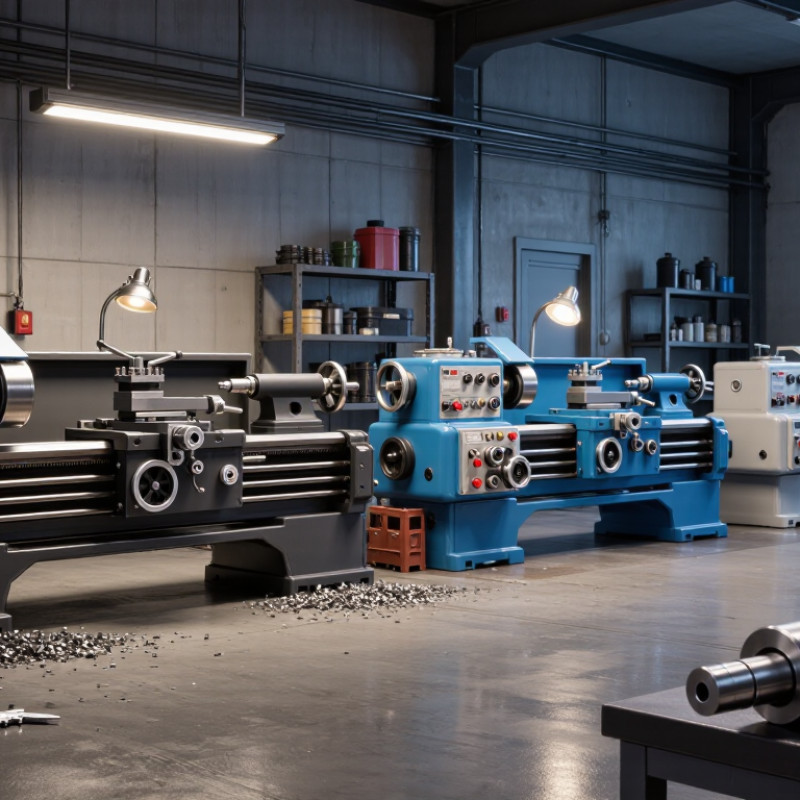
What Is the Best Parallel Lathe for Global Buyers?

What Is a Parallel Lathe and Why Does It Matter to Global Buyers?

A parallel lathe is a machine tool with a horizontally aligned spindle and cutting tool. It removes material from rotating workpieces. Operators use it for shafts, bushings, threads, tapers, and facing operations.

Its value becomes clearer in international purchasing. The 2023 World Machine Tool Survey estimated global machine-tool consumption at about 84 billion US dollars. That scale increases demand for reliable, serviceable equipment. A global buyer should examine spindle speed, swing over bed, distance between centers, motor power, and control accuracy. ISO 230-1 also highlights geometric accuracy and repeatability as measurable performance factors. These figures matter more than a polished catalog.

A practical check is simple. Place a test bar between centers, cut a light pass, and measure both ends. Uneven diameter may reveal alignment problems. Ask for inspection records, electrical drawings, spare-part lists, and operator training details. Local voltage compatibility matters too. A machine can be mechanically strong but unusable after delivery.

The best choice is not always the most automated model. A robust manual or semi-automatic design may suit repair shops with limited technical support. However, comparing freight, installation, tooling, and downtime is essential. My own assessment would remain cautious: published accuracy can differ from workshop results. Buyers should request sample-machining evidence before signing.

Which Parallel Lathe Specifications Best Match Your Production Needs?

Global buyers should match parallel lathe specifications to real production demands, not advertised size alone. A larger machine is not always better. Start with the maximum workpiece diameter, length, and weight. Swing over bed should exceed the largest part by a practical safety margin. Distance between centers must include tooling and chuck clearance.

Spindle bore matters when bars pass through the headstock. A small bore can create repeated setups and wasted labor. Check spindle speed range, torque, and available gear steps. High speed supports smaller diameters and fine finishes. Low-speed torque helps with heavy cuts. For steel shafts, rigidity often matters more than top speed. A rigid bed, accurate ways, and stable tailstock reduce vibration during long turning operations.

Match feed rates and threading capability to your parts. Metric and imperial threading support may be important for mixed orders. Confirm chuck size, tool post compatibility, coolant capacity, and motor power. Electrical requirements also deserve attention, especially for factories using different voltage systems. I have seen buyers focus on motor horsepower while overlooking service access and operator training. That mistake becomes expensive. Ask for inspection records, positioning accuracy, repeatability, and test-cut results. A test cut reveals more than a polished specification sheet. Leave room for uncertainty. Your current parts may not represent next year’s workload. Choose measurable capacity, but question every assumption before purchasing.

What Is the Best Parallel Lathe for Global Buyers? - Which Parallel Lathe Specifications Best Match Your Production Needs?

Production Requirement Recommended Lathe Configuration Swing Over Bed Distance Between Centers Spindle Bore Spindle Speed Range Typical Motor Power Suitable Materials Key Selection Priority
Toolroom work, maintenance, prototypes Compact manual parallel lathe with quick-change gearbox 300–450 mm 750–1,500 mm 38–52 mm 40–1,800 rpm 2.2–5.5 kW Mild steel, aluminum, brass, engineering plastics Ease of use, compact footprint, threading capability, and tooling availability
Small-batch general machining Medium-duty engine lathe with powered longitudinal and cross feeds 450–600 mm 1,000–2,000 mm 52–80 mm 25–1,800 rpm 5.5–11 kW Carbon steel, stainless steel, cast iron, aluminum alloys Balanced capacity, rigid bed, repeatable feed rates, and broad workholding options
Higher-volume batch production Heavy-duty parallel lathe with clutch drive and rapid traverse 600–800 mm 1,500–3,000 mm 80–105 mm 16–1,200 rpm 11–22 kW Large steel shafts, forgings, cast iron components Bed rigidity, spindle torque, thermal stability, chip control, and duty-cycle capability
Large-diameter or heavy workpieces Extra-heavy-duty lathe with wide bed and large spindle assembly 800–1,250 mm 1,500–4,000 mm 105–160 mm 5–800 rpm 22–45 kW Heavy steel, large forgings, rollers, flanges, and industrial shafts Maximum load capacity, low-speed torque, foundation requirements, and lifting access
Long shafts, pipes, and rotating assemblies Long-bed parallel lathe with steady rests and follow rest 500–800 mm 2,000–6,000 mm 80–130 mm 12–1,200 rpm 11–30 kW Steel shafts, hydraulic cylinders, pipes, and drive components Center alignment, bed length, steady-rest capacity, tailstock travel, and vibration control
Precision turning and finishing operations Precision manual lathe with hardened guideways and fine-feed controls 300–500 mm 750–1,500 mm 38–65 mm 30–2,000 rpm 3–7.5 kW Tool steel, alloy steel, stainless steel, brass, and aluminum Geometric accuracy, spindle runout, smooth feed motion, thermal control, and measurement repeatability
Mixed metric and imperial production Universal parallel lathe with metric and inch threading capability 400–600 mm 1,000–2,000 mm 52–80 mm 20–1,600 rpm 5.5–15 kW General engineering metals and imported or locally specified components Threading range, change-gear flexibility, operator familiarity, and spare-parts access
Export-oriented operation with varied power standards Configurable parallel lathe with selectable electrical and safety options 400–800 mm 1,000–3,000 mm 52–105 mm 16–1,800 rpm 5.5–22 kW Steel, stainless steel, cast iron, aluminum, and copper alloys Local voltage and frequency compatibility, guarding, documentation, serviceability, and shipping dimensions
Selection note: The ranges shown are typical engineering specifications for conventional parallel lathes. Final selection should be verified against workpiece diameter and length, maximum load, material hardness, cutting-tool requirements, required tolerances, available floor space, electrical standards, and local safety regulations.

How Should Buyers Compare Lathe Accuracy, Capacity, and Features?

When comparing the best parallel lathe, buyers should start with the work they actually produce. Measure the largest diameter, length, and material weight. Swing over the bed shows maximum diameter, but swing over the cross slide is often more practical. Distance between centers matters for shafts and long components. A larger spindle bore can reduce setup time. It also supports bar work more comfortably.

Accuracy should be checked through measurable results, not attractive specifications. Ask for spindle runout data, test-cut records, and positioning repeatability. Inspect the bed for consistent grinding and firm carriage movement. A rigid cast structure can reduce vibration during steel turning. Variable speed control improves flexibility, while a reliable gearbox supports repeatable threading. A digital readout helps, but it cannot correct poor alignment. Keep that in mind.

Global buyers should also compare electrical compatibility, guarding, documentation, and service access. Confirm voltage, frequency, plug requirements, and available replacement parts before ordering. Emergency stops and clear shields are essential in daily production. Some machines offer impressive capacity but lack comfortable controls. That weakness becomes expensive after eight hours of operation. No checklist is perfect. I would still request a sample cut, especially when tolerance requirements are tight. A modest lathe with stable accuracy may outperform a larger model with uncertain quality. Consider operator training, inspection tools, and floor space as part of the purchase.

What Is the Best Parallel Lathe for Global Buyers?

Comparing representative parallel-lathe configurations by capacity, spindle access, positioning accuracy, and commonly requested features.

Heavy-duty configurations provide the greatest swing, center distance, and spindle bore for large workpieces, while compact and mid-range models generally offer easier installation and lower operating costs. Positioning accuracy is shown in micrometres, where a lower value indicates better accuracy. The values are representative non-brand benchmarks based on commonly published industrial specification ranges; buyers should verify final figures, testing standards, and included accessories with each supplier.

What Machine Standards and Safety Requirements Apply Internationally?

What Is the Best Parallel Lathe for Global Buyers?

For international buyers, the best parallel lathe is not simply the fastest machine. It must satisfy the safety rules of its destination market. ISO 12100 supports systematic risk assessment and hazard reduction during design. ISO 23125 addresses safety requirements for turning machines. Electrical systems commonly require alignment with IEC 60204-1, although local regulations may add extra conditions.

A reliable evaluation checks:

  • Guarding and emergency stops
  • Interlocked doors and chuck protection
  • Controlled spindle braking
  • Electrical cabinet safety and protection
  • Chip shields capable of resisting flying fragments

Operators should not reach rotating parts during normal work. Chip shields must resist flying fragments, not merely look strong. Electrical cabinets need correct voltage, grounding, labeling, and protection against dust or moisture. Some markets may require conformity assessment, technical files, or specific marks.

Requirements differ by country. Never treat one certificate as global approval.

Tips for international buyers

Ask the supplier for a machine risk assessment, wiring diagram, safety component list, and operating manual in the target language. Confirm testing records before shipment. Check whether the chuck, tooling, and accessories are included in the safety review. During factory acceptance, test every emergency stop and guard switch. Small details matter.

In field inspections, documentation is often weaker than the machine itself. That is a warning. A lathe may cut accurately but still fail local workplace rules. Buyers should involve a qualified safety engineer before installation. Local electrical inspection can reveal problems that factory testing misses.

Safety assumptions age badly.

How Can Buyers Evaluate Suppliers, Costs, Shipping, and After-Sales Support?

What Is the Best Parallel Lathe for Global Buyers?

Choosing the best parallel lathe starts with the supplier, not the catalogue photo. A reliable supplier should provide clear drawings, tolerance data, inspection records, and a practical cutting test. Ask for spindle speed ranges, swing over bed, distance between centers, spindle bore, motor power, and machine weight. These details reveal whether the lathe fits your workshop and materials.

Supplier evaluation needs evidence. Check factory experience, quality-control procedures, export history, and the qualifications of service technicians. Request a video showing the exact machine under power, not only a polished showroom tour. A written warranty should define coverage, response time, excluded parts, and technical support. Some suppliers answer quickly before payment, then become slow afterward. That risk deserves attention.

Tips: Calculate the landed cost. Include the lathe, tooling, packing, insurance, freight, customs charges, installation, spare parts, and local taxes. Compare shipping terms carefully, because a low factory price can hide expensive port handling. Ask for the crate dimensions and loading method. Confirm whether replacement components are standard and available. Keep every promise in writing.

A small trial cut can expose vibration, poor alignment, or rough finishing. Do not accept attractive claims without measurements. I would also request references from buyers in similar climates and industries. Yet references are not perfect evidence. Their workload, maintenance habits, and expectations may differ. A careful buyer should leave room for that uncertainty.

FAQS

How should buyers choose the right parallel lathe size?

Measure the largest diameter, length, and weight of your actual workpieces. Leave practical clearance. Swing over the bed should exceed the part diameter. Distance between centers must include the chuck, tools, and tailstock space. A larger machine is not always better.

Why is spindle bore important for production work?

A larger spindle bore allows bars to pass through the headstock. This can reduce repeated setups and handling time. Check the bore against your common bar sizes. Small bores may create hidden labor costs. That detail is easy to miss.

Which spindle speed and torque should buyers compare?

High speeds support small diameters and smoother finishes. Low-speed torque helps with heavy cuts in steel. Compare the complete speed range, torque, and gear steps. Top speed alone can mislead. Rigidity may matter more.

How can buyers evaluate lathe accuracy?

Request spindle runout data, positioning results, repeatability records, and test-cut samples. Inspect carriage movement and bed grinding consistency. A test cut can reveal vibration or alignment problems. A digital readout cannot repair poor geometry. Measured results matter more.

What features improve long shaft turning?

A rigid bed, accurate ways, and a stable tailstock reduce vibration. Distance between centers should match your longest shaft. Check support arrangements for slender parts. Long cuts expose weak machine structures quickly. Steel is demanding.

Which compatibility details should global buyers confirm?

Confirm voltage, frequency, plug requirements, motor power, and available replacement parts. Check chuck size, tool post compatibility, coolant capacity, and threading systems. Metric and imperial threading may both matter for mixed orders. Electrical mismatches can delay installation. Small details become expensive.

How should buyers compare the total purchase cost?

Calculate the landed cost, including packing, insurance, freight, customs charges, installation, taxes, and spare parts. Request crate dimensions and loading details. A low purchase price may hide port handling costs. Keep every cost assumption in writing. Budgets can drift.

What evidence should buyers request before ordering?

Ask for drawings, inspection records, tolerance data, service details, and a cutting test. Request a video of the exact machine under power. Check warranty coverage, response times, and technical support. References can help, but they are not perfect evidence. Your workload may differ.

How should buyers prepare for future production needs?

Compare current parts with possible future diameters, lengths, materials, and order volumes. Leave room for uncertainty. Include operator training, inspection tools, floor space, and service access. A machine may fit today but struggle next year. That possibility deserves attention.

Conclusion

Choosing the best Parallel Lathe for global buyers requires more than comparing prices. A Parallel Lathe is a versatile machine tool designed for turning, facing, threading, drilling, and related operations, making it valuable for workshops with varied production needs. Buyers should match spindle speed, motor power, swing diameter, center distance, bed rigidity, tooling compatibility, and automation options with their materials, workpiece sizes, production volume, and required tolerances. Accuracy, repeatability, capacity, ease of operation, and maintenance access should be evaluated together rather than separately.

International purchasing also requires careful attention to electrical compatibility, machine documentation, guarding, emergency controls, training, and applicable safety and quality standards. A complete supplier assessment should include manufacturing capability, inspection procedures, customization options, packaging, shipping arrangements, installation guidance, spare-parts availability, warranty terms, and technical support. By comparing total ownership cost instead of only the initial quotation, buyers can select a reliable Parallel Lathe that supports safe operation, stable productivity, and long-term value across different production environments.


Amelia

Amelia

Amelia is a seasoned marketing professional with a wealth of expertise in our company’s core offerings. With an unwavering passion for driving growth and innovation, she plays a pivotal role in shaping our marketing strategies and enhancing brand visibility. A key aspect of her responsibilities......