In the world of precision machining, the Turret Lathe shines as a crucial tool. This machine combines versatility with accuracy, allowing manufacturers to achieve complex shapes with ease. Unlike standard lathes, turret lathes offer the advantage of multiple tools being set up simultaneously. This capability reduces production time and improves efficiency.
Engineers and machinists appreciate the reliability of turret lathes. Their design allows for quicker adjustments, making them ideal for both small and large production runs. High accuracy ensures that the produced components meet stringent specifications. However, different operations can sometimes lead to inconsistencies, prompting users to refine their setups.
The benefits of using a turret lathe extend beyond mere speed. They promote skill development among operators, as mastering this machine requires understanding its various functions. Ultimately, investing in turret lathe technology can bring significant advantages, yet it is essential to remain aware of the machine's limitations. Continuous learning and adaptation in its use lead to better outcomes in precision machining.
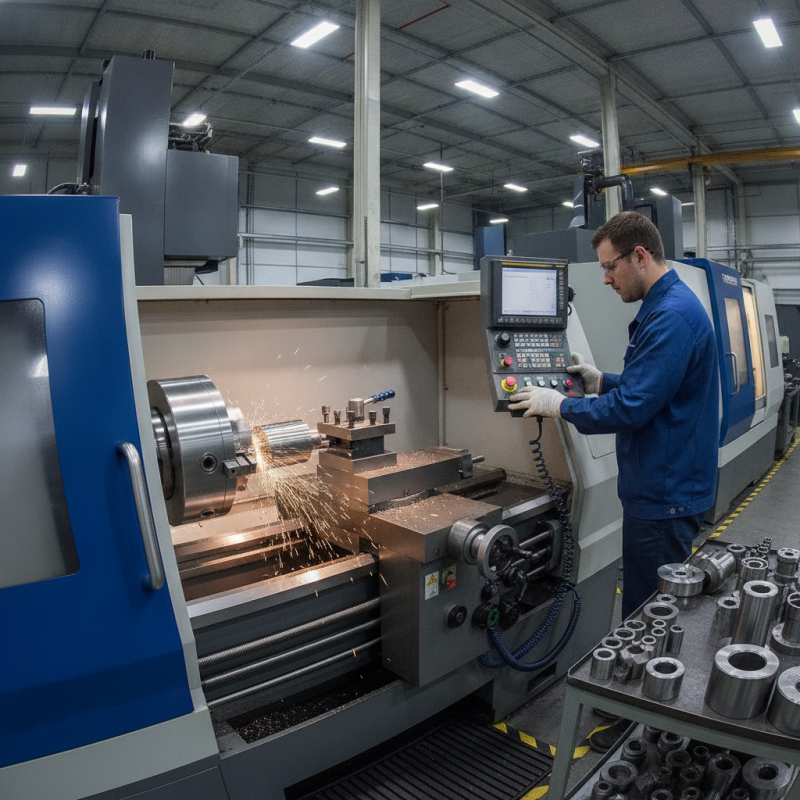
Advantages of Turret Lathes in Precision Machining
Turret lathes are pivotal in precision machining due to their remarkable advantages. Their unique design allows for multiple tools to be mounted simultaneously. This setup enhances productivity by reducing tool change times. Operators can switch tools efficiently, enabling quick processing of complex parts. The result is a high output, especially beneficial for large production runs.
Accuracy is another key benefit. Turret lathes provide consistent performance with minimal tool wear. Their rigid construction ensures stability during operations, resulting in precision that meets tight tolerances. However, operators must remain vigilant about regular maintenance. Neglecting this can lead to discrepancies in workpieces.
Moreover, turret lathes accommodate a wide range of materials. They can handle metals, plastics, and composites. This versatility opens up new possibilities for manufacturers. Nonetheless, choosing the right tooling system remains challenging. The wrong tools can compromise the machining process. Operators should invest time in selecting appropriate options for optimal outcomes.
Top 10 Benefits of Using Turret Lathes for Precision Machining
Enhanced Repetitive Production for Complex Parts
Turret lathes are pivotal in precision machining, especially for producing complex parts at scale. Their design allows for rapid tool changes and adaptability in production settings. According to a report by the American Machinist Association, using turret lathes can increase productivity by 30% compared to conventional lathes. This efficiency reflects not only in time savings but also in reduced operational costs.
Enhanced repetitive production is crucial for industries like aerospace and automotive. Precision is key here. Turret lathes can create intricate components with minimal tolerance levels. A 2020 study showed that manufacturers reported a 25% reduction in scrap rates when utilizing turret lathes for detailed work. While the benefits are compelling, issues such as setup complexity and operator skill demands still need addressing.
Ensuring adequate training is vital for maximizing the lathe's potential. Despite advancements, reliance on technology alone has limitations. Operators must monitor processes closely to mitigate errors. A 2021 industry survey highlighted that 40% of companies experienced quality control issues due to insufficient operator knowledge. Thus, while turret lathes provide significant advantages, ongoing training and process evaluation remain essential for optimal performance.
Increased Tooling Efficiency and Versatility
Turret lathes offer significant tooling efficiency and versatility in precision machining. These machines can accommodate multiple tools simultaneously, enabling complex operations without changing setups. According to a report by the National Institute of Standards and Technology (NIST), using turret lathes can enhance productivity by up to 30%. This improvement directly stems from reduced setup times, allowing machinists to focus more on actual machining tasks.
Versatility is another key strength of turret lathes. They can perform a variety of machining processes, such as drilling, turning, and milling, all within one setup. A study by the American Society of Mechanical Engineers (ASME) highlights that this adaptability can result in significant cost savings. Companies often report around 20% lower operational costs due to decreased tool changes and increased machine utilization. However, this flexibility requires operators to maintain high attention to detail. Mistakes in setup can lead to increased waste.
While turret lathes deliver impressive advantages, challenges also exist. Some users note that inadequate training on these machines can lead to efficiency losses. Furthermore, the initial investment for advanced turret lathe systems can be considerable. Despite these drawbacks, the benefits often outweigh the challenges, making turret lathes a valuable asset in precision machining environments.
Improved Surface Finish and Precision Tolerance
Turret lathes have transformed precision machining significantly, especially in surface finish and precision tolerance. According to industry reports, using turret lathes can improve surface finish by up to 30%. This enhancement is attributed to their ability to maintain consistent cutting speeds and tool orientation. Operators can achieve tighter tolerances, often within ±0.005 inches, which is critical for high-precision applications.
The versatility of turret lathes allows for various operations, such as drilling, turning, and shaping. Each tool can be preset. This enables faster changeovers and reduces idle time. However, achieving a flawless finish requires skilled operators and regular maintenance. Poor tool condition can lead to increases in surface roughness.
Moreover, a recent study found that about 15% of precision machined parts fail to meet surface finish standards due to inadequate setups. This highlights the importance of not only the machine but also the operator's expertise. Investing in skilled training can prevent costly errors and improve overall production quality. Understanding the machine's capabilities is key to maximizing benefits.
Reduction in Setup Times and Operational Costs
Turret lathes are transforming precision machining. One significant advantage is the reduction in setup times. Traditional lathes often require extensive adjustments before each job. In contrast, turret lathes streamline this process. They allow for quick changes between operations, enhancing productivity.
Operational costs also benefit from using turret lathes. With less downtime and fewer manual adjustments, businesses can achieve higher output rates. This efficiency translates to lower overall costs. However, proper training is essential. Workers must understand the machine's capabilities to maximize these benefits.
Tips: Ensure that all tools are organized and accessible in the turret. Familiarity with the machine can lead to faster adjustments. Regular maintenance may prevent costly breakdowns. Always monitor tool wear closely. This practice can lead to better quality parts and reduce waste. Embracing this strategic approach can make a significant difference over time.
Top 10 Benefits of Using Turret Lathes for Precision Machining
| Benefit |
Description |
Impact on Operation |
| Reduction in Setup Times |
Turret lathes allow for faster changeovers between parts, significantly cutting down on idle time. |
Increases machine utilization by up to 30%. |
| Operational Cost Savings |
Lower material waste and reduced labor costs through automation and efficient processes. |
Savings can reach up to 25% annually. |
| Enhanced Precision |
Highly accurate machining capabilities facilitate tighter tolerances. |
Improves product quality and reduces rework. |
| Versatility |
Capable of handling a wide variety of materials and part geometries. |
Enables production flexibility to meet diverse customer needs. |
| Reduced Labor Dependence |
Automated setups means less manual intervention is required. |
Lowers the skill level required for operators. |
| Process Consistency |
Maintains product uniformity over long production runs. |
Decreases variability in production quality. |
| Improved Safety |
Enclosed systems and automated processes lead to lower accident rates. |
Creates a safer working environment. |
| Longer Tool Life |
Optimized cutting conditions extend the longevity of tools. |
Reduces tooling costs and downtime for tool changes. |
| Less Waste Generation |
Efficient material usage reduces the scrap rate. |
Contributes to sustainability efforts in manufacturing. |
| Customizable Production |
Easy to modify setups for custom or one-off parts. |
Enables quick response to unique manufacturing requests. |
Ease of Automation and Integration in Modern Manufacturing Systems
Turret lathes play a crucial role in modern manufacturing systems, especially regarding automation. Their design allows for the integration of advanced technology. With computer numerical control (CNC) systems, manufacturers can achieve higher precision and efficiency. The ability to program complex tasks enhances productivity. Operators can focus on quality rather than repetitive tasks. This shift reduces the risk of human error, which is vital in precision machining.
Yet, automating processes with turret lathes is not without challenges. Technicians must have specialized knowledge to maintain and troubleshoot these systems. Some companies may struggle with the initial setup and integration. Employee training is essential but can be time-consuming and costly. Ensuring that staff are equipped to handle automated systems often requires ongoing education. Companies need to invest in a knowledgeable workforce to fully harness these technologies.
Despite these hurdles, the benefits are significant. Automation leads to consistent quality in production. It also allows for faster turnaround times. The flexibility of turret lathes means they can adapt to various machining tasks. This adaptability is vital as market demands shift. Careful planning and thoughtful implementation are required to optimize these capabilities fully. The journey towards seamless automation in turret lathes is ongoing, demanding both innovation and reflection.
FAQS
: Turret lathes are essential for precision machining, particularly in producing complex parts at scale.
They can increase productivity by 30% compared to traditional lathes, reducing both time and costs.
Precision ensures that intricate components meet strict tolerance levels, critical in industries like aerospace and automotive.
Setup complexity and operator skill demands still pose challenges that need careful consideration.
Inadequate training can lead to quality control issues, impacting overall production and efficiency.
Regular maintenance is vital; poor tool conditions can increase surface roughness and diminish output quality.
Quick changeovers reduce idle time, enhancing overall productivity during operations.
About 15% of precision machined parts can fail surface finish standards due to inadequate setups.
Knowledge of the machine’s capabilities helps operators maximize benefits and prevent costly errors.
Organizing tools in the turret can lead to faster adjustments and improved production efficiency.
Conclusion
Turret lathes offer significant advantages in precision machining, making them a valuable asset for manufacturers. One of their key benefits is enhanced repetitive production capabilities, allowing for the efficient creation of complex parts with consistent quality. This efficiency extends to increased tooling versatility, as turret lathes can accommodate multiple tools for varied operations, improving overall machining processes.
Additionally, turret lathes contribute to improved surface finishes and tighter precision tolerances, which are crucial for high-quality output. The reduction in setup times and operational costs further enhances their appeal, enabling manufacturers to maximize productivity. Moreover, the ease of automation and integration with modern manufacturing systems positions turret lathes as a vital tool in contemporary machining environments, aligning with the industry's evolving demands.

 XINSHIHENG