Choosing a milling machine is rarely as simple as comparing spindle speed and table size. Global buyers face different materials, production volumes, workshop spaces, power systems, and service conditions. A compact bench model may suit a small maintenance shop, while a rigid CNC platform may be essential for aerospace components. The right Milling-Machine must match the work, not merely the brochure.
John Saunders, a respected CNC educator and founder of NYC CNC, often emphasizes, “The best machine is the one that makes you money.” That practical idea guides this selection. It shifts attention from impressive specifications toward repeatability, tooling access, control software, operator training, and long-term operating costs. A fast spindle means little when vibration damages a finished surface. A low purchase price can also become expensive when spare parts travel across borders.
This guide examines seven strong options for international buyers. Each model is considered through practical criteria, including rigidity, work envelope, spindle performance, accuracy, automation, safety features, and technical support. Regional voltage compatibility matters. So do shipping requirements, warranty coverage, and local maintenance skills. Some machines offer excellent value but limited customization. Others deliver advanced performance but demand a larger budget and more experienced operators.
There is no perfect choice.
That limitation deserves attention. Product rankings can change with availability, exchange rates, and supplier support. Buyers should verify current specifications directly with manufacturers before ordering. The final decision should also include sample machining tests, installation planning, and a realistic total-cost assessment. A dependable Milling-Machine should produce consistent parts, protect workflow, and remain serviceable after the initial purchase.
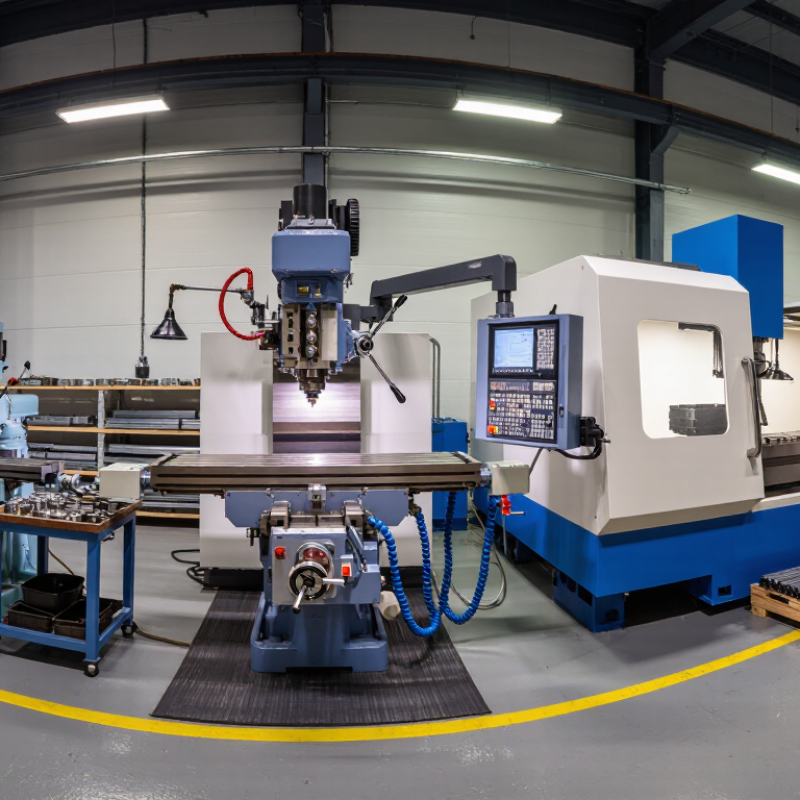
For global buyers comparing the seven best milling machines, axis configuration deserves more attention than headline spindle speed. Three-axis machines move along X, Y, and Z, making them practical for plates, pockets, and general production. Four-axis models add rotary positioning, reducing setups for parts with radial features. Five-axis machines tilt and rotate the workpiece, improving access to complex surfaces and shortening tool reach.
ISO 10791 provides test methods for machining centres, including geometric accuracy, positioning, and functional checks. It does not certify every machine as equally capable. Buyers should request inspection results, repeatability data, and thermal-compensation details. A machine can look impressive on paper.
Industry demand supports this careful approach. Grand View Research estimated the global CNC machine market at about US$83 billion in 2023, with projected double-digit growth through 2030. More automation is not always better. For stable, high-volume work, a three-axis machine may deliver lower training and maintenance costs. Four-axis equipment suits indexed faces and cylindrical components. Five-axis equipment becomes valuable when aerospace, medical, or mold parts require fewer fixtures and smoother toolpaths.
Check the details.
A useful factory comparison measures cycle time, setup changes, scrap rate, and operator skill requirements. Five-axis accuracy also depends on calibration, fixturing, post-processing, and machine stiffness. This is where buyers sometimes overestimate the axis count. ISO 10791 testing can reveal geometric limits, but production trials expose the uncomfortable gaps between laboratory accuracy and daily shop-floor performance.
It moves along X, Y, and Z axes. It suits plates, pockets, flat surfaces, and routine fixtures. A rigid three-axis model may outperform a cheaper complex machine.
A fourth axis adds rotary positioning for cylindrical or radial features. It can reduce manual repositioning and fixture changes. That saves time.
Five-axis equipment reaches angled faces and complex curved surfaces. It can shorten tool reach and improve toolpath smoothness. However, calibration and programming require greater skill.
No. Axis count alone does not guarantee better output. A five-axis machine may increase training, maintenance, and software costs. For stable, high-volume work, three axes may be enough.
Compare machine travel with the largest real component. Allow clearance for the vise, tool holder, fixtures, and chip evacuation. A 600-millimeter table does not offer 600 millimeters of usable travel.
Request positioning accuracy, repeatability, spindle runout, and thermal data. A ballbar test can reveal circular interpolation errors. Measure a test bar at startup and later during the shift. The results may be less comfortable than the brochure.
ISO 10791 includes geometric accuracy, positioning, and functional checks for machining centres. ISO 230-2 describes methods for positioning accuracy and repeatability. These tests do not prove equal production performance. Daily production trials still matter.
Include delivery, installation, taxes, tooling, energy, maintenance, and training. Tooling may include cutters, holders, collets, probes, and replacement inserts. Plan an initial tooling allowance of at least 10 percent. Freight can change the decision quickly.
Compare costs across five to ten years, not only at purchase. Inspect lubrication systems, coolant pumps, belts, bearings, and software support. Remote service may require technician travel and specialized parts. Keep a 10-to-15-percent contingency reserve, then review it after six months.
Choosing the right Milling-Machine requires a clear understanding of machine type, production goals, and international purchasing requirements. This guide compares 3-, 4-, and 5-axis configurations within the principles of ISO 10791, explaining how axis count affects flexibility, setup time, and machining complexity. It also evaluates essential specifications such as positioning accuracy, spindle speed, motor power, work capacity, operating envelope, and CNC control functions. Seven machine options are reviewed according to their practical balance of precision, productivity, and application range.
For global buyers, the selection process should also include CE, UL, ISO 9001, voltage compatibility, documentation, and export compliance. A realistic budget must cover more than the initial machine price, including cutting tools, installation, energy consumption, scheduled maintenance, replacement parts, software, and operator training. By comparing both technical performance and total ownership cost, buyers can select a reliable Milling-Machine that supports long-term efficiency, safe operation, and consistent production across different markets.

 XINSHIHENG